Home  /  Composers  /  Miklós Rózsa
Composer

Miklós Rózsa

1907–1995

Film noir and the great biblical epics

Miklós Rózsa was born in Budapest in 1907 and grew up playing violin and collecting Hungarian folk songs, which left a lasting mark on his music. He studied in Leipzig and built a promising career as a concert composer, but it was in London in the 1930s that he began writing for films, working for fellow Hungarian Alexander Korda. When production of Korda's fantasy The Thief of Bagdad moved to Hollywood during World War II, Rózsa followed.

In America he quickly became known for music of dark intensity. His scores for Billy Wilder's Double Indemnity and The Lost Weekend helped define the sound of film noir, and for Alfred Hitchcock's Spellbound (1945) he used the eerie wail of the theremin to portray a troubled mind, winning his first Academy Award. A second followed for A Double Life (1947).

At MGM in the 1950s Rózsa entered a new phase as the master of the historical epic. He researched ancient and medieval music to give Quo Vadis, Ivanhoe and Julius Caesar an authentic flavor, and his score for Ben-Hur (1959), one of the longest ever written for a film, brought him his third Oscar. El Cid and King of Kings followed.

Rózsa never abandoned the concert hall, and his Violin Concerto was premiered by Jascha Heifetz. He called this balance of film and concert work his "double life," the title of his autobiography. His last film score was for Dead Men Don't Wear Plaid (1982). He died in Los Angeles in 1995.

THE ART

Music by Miklós Rózsa

Art celebrating his film scores. Click any piece to view it larger.

THE FILMS

The Story and the Score

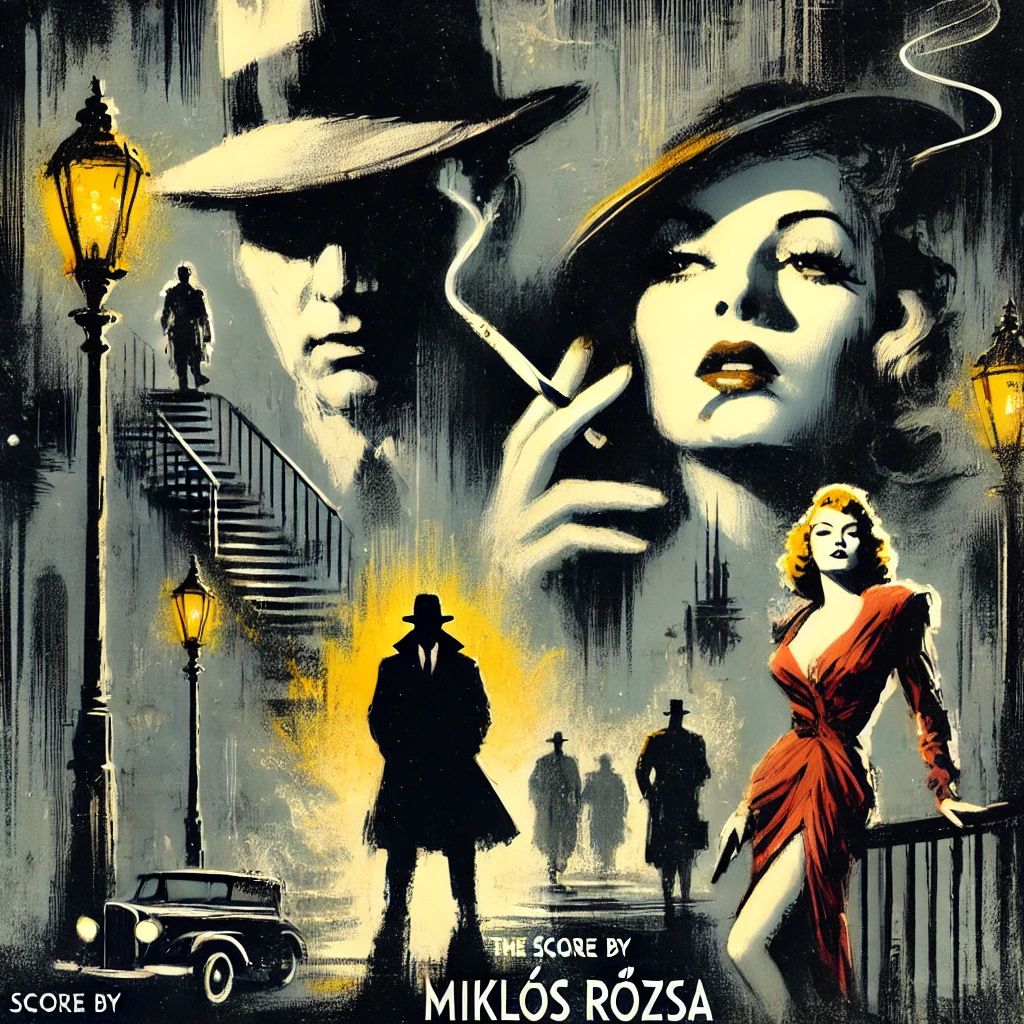
Double Indemnity poster art

Double Indemnity (1944)

The Story

Insurance salesman Walter Neff falls for seductive Phyllis Dietrichson, who persuades him to help murder her husband and collect on a double indemnity accident policy. Their perfect crime begins to unravel under the scrutiny of Walter's sharp claims investigator, Barton Keyes. Fred MacMurray, Barbara Stanwyck and Edward G. Robinson star in Billy Wilder's noir.

The Music

Rózsa's Oscar-nominated score helped define the sound of film noir. Its relentless, march-like main theme suggests a fate the characters cannot escape, and its dissonant harmonies and dark orchestral colors tighten the tension. The studio's music chief reportedly found it too harsh, but Wilder loved it.
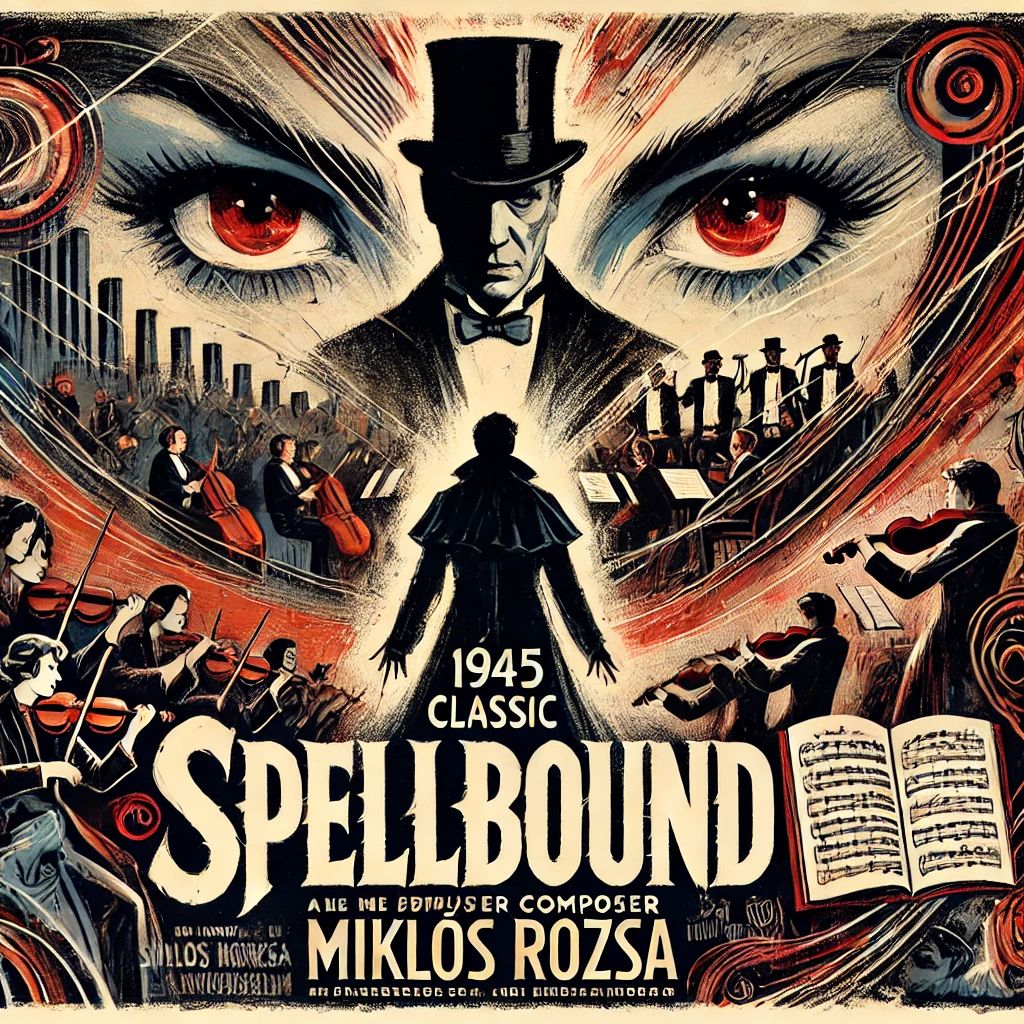
Spellbound poster art

Spellbound (1945)

The Story

Psychiatrist Constance Petersen falls in love with the new head of her hospital, Dr. Edwardes, but discovers he is an amnesiac impostor who may have committed murder. She helps him unlock his buried memories through psychoanalysis. Ingrid Bergman and Gregory Peck star in Hitchcock's thriller, with a dream sequence designed by Salvador Dalí.

The Music

Rózsa won the Oscar for this score, using the eerie electronic wail of the theremin to represent the hero's troubled mind. Paired with a lush romantic theme for the lovers, the theremin made psychological disturbance audible. The score became a popular hit and influenced the sound of many science-fiction films.

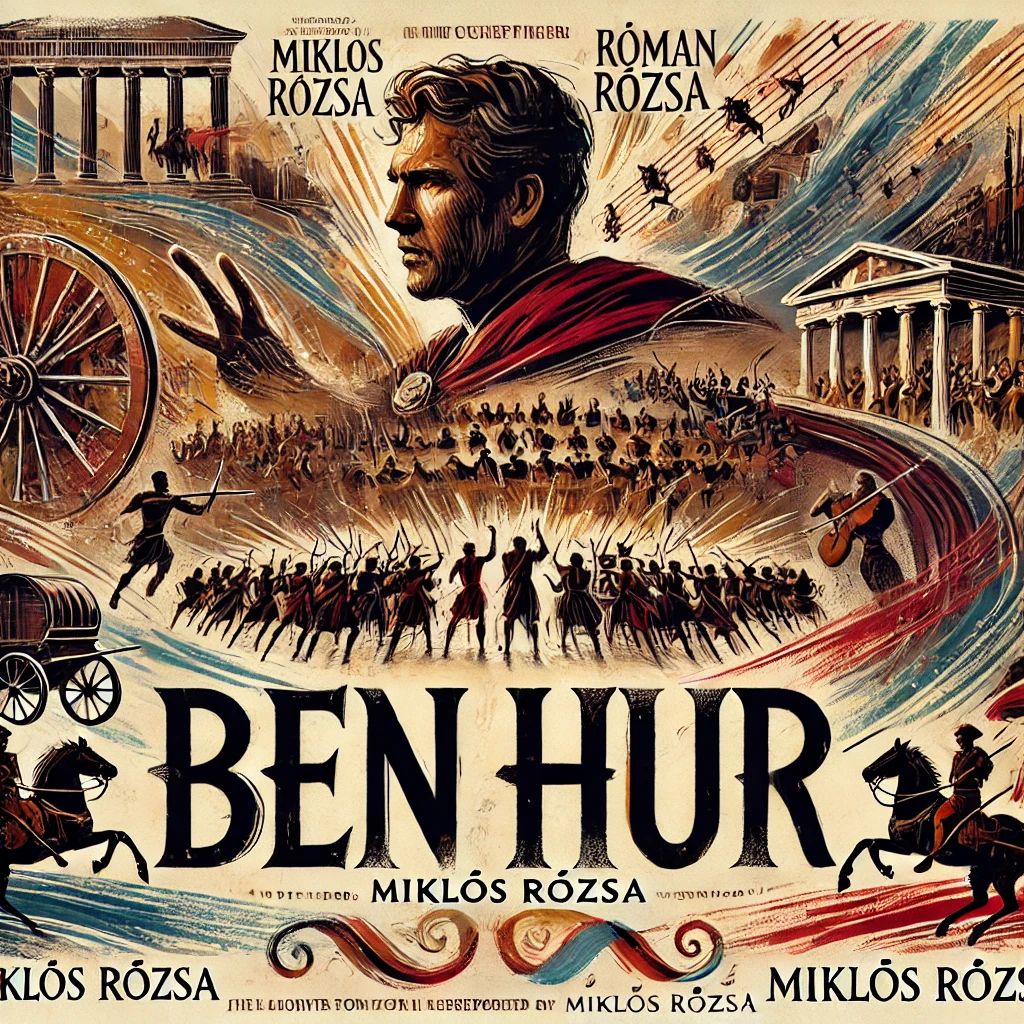
Ben-Hur poster art

Ben-Hur (1959)

The Story

Jewish prince Judah Ben-Hur is betrayed by his Roman boyhood friend Messala and condemned to slavery in the galleys. Surviving years of hardship, he returns to seek revenge, culminating in a spectacular chariot race, and his path crosses the life of Christ. Charlton Heston stars in William Wyler's epic, winner of a record eleven Oscars.

The Music

Rózsa's Oscar-winning score, one of the longest ever written for a film, combines Roman marches, ancient modes and reverent themes for Christ. Brass fanfares add grandeur, and a tender love theme gives the story warmth. The famous chariot race plays without music, making the score's return all the more powerful.