Home  /  Composers  /  Dimitri Tiomkin
Composer

Dimitri Tiomkin

1894–1979

High Noon and the sound of the American West

Dimitri Tiomkin was born in 1894 in Kremenchuk, in present-day Ukraine, and trained as a pianist at the St. Petersburg Conservatory, where his teachers included Alexander Glazunov. He played piano for silent films to earn money, then left Russia after the revolution and built a concert career in Berlin and Paris. In 1928 he gave the European premiere of George Gershwin's Concerto in F, and he came to America the same year.

Tiomkin was drawn into film by his wife, the dancer and choreographer Albertina Rasch, who staged dances for Hollywood musicals. An injury to his arm ended his performing career, and by the late 1930s he was a busy film composer, scoring Lost Horizon and Mr. Smith Goes to Washington for Frank Capra.

Although he never lost his Russian accent, Tiomkin became the composer most associated with the American West. High Noon (1952) broke new ground by building its score around a ballad, "Do Not Forsake Me, Oh My Darlin'," which won him two Academy Awards, for score and song. He won again for the aviation drama The High and the Mighty, whose whistled theme became a hit, and for The Old Man and the Sea. Giant, Gunfight at the O.K. Corral, Rio Bravo and The Alamo added to his legend, as did the theme for TV's Rawhide.

Tiomkin was also known for his showmanship. Accepting his Oscar in 1955, he thanked a string of classical composers, from Brahms to Beethoven, a gracious nod to his own sources. He died in London in 1979.

THE ART

Music by Dimitri Tiomkin

Art celebrating his film scores. Click any piece to view it larger.

THE FILMS

The Story and the Score

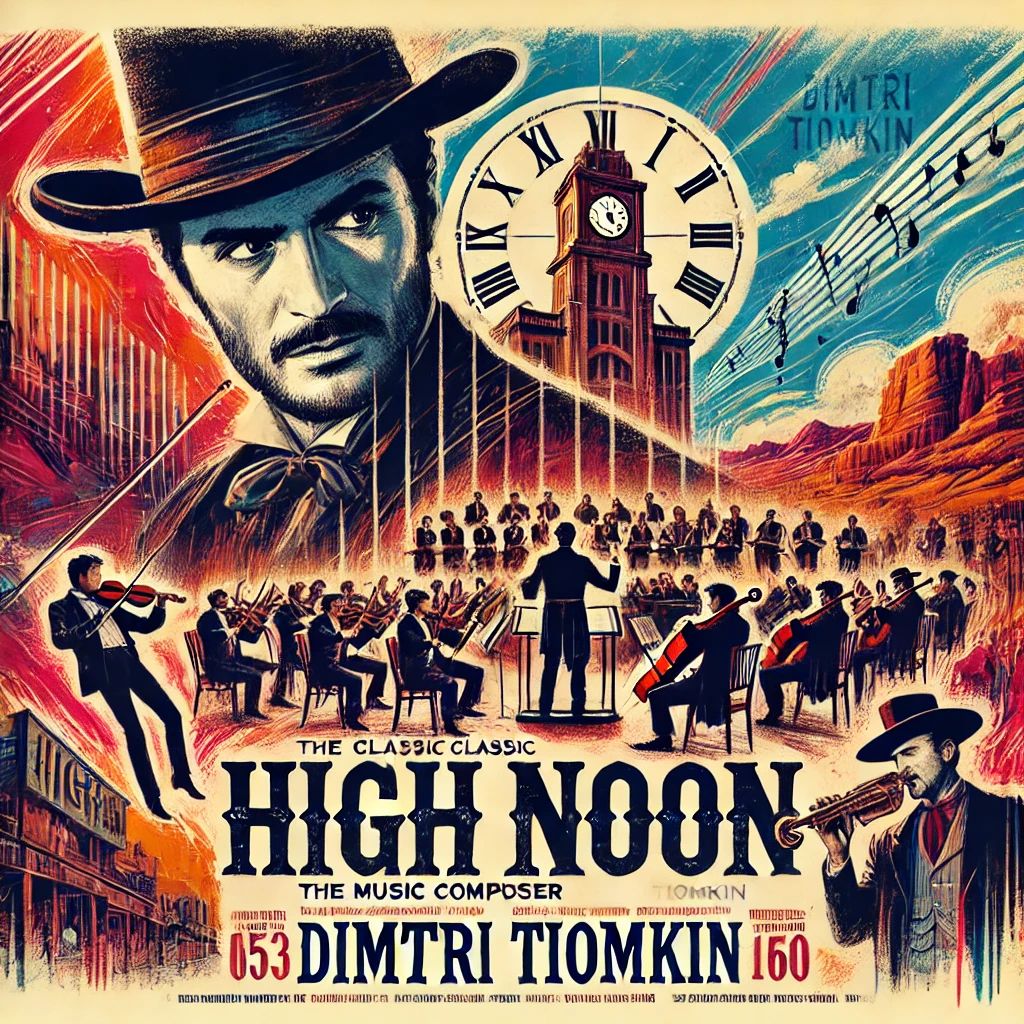
High Noon poster art

High Noon (1952)

The Story

On his wedding day, retiring marshal Will Kane learns that a killer he sent to prison is arriving on the noon train, with his gang waiting to take revenge. When the townspeople refuse to help, Kane must face them alone. Gary Cooper won an Oscar, with Grace Kelly, in a Western that unfolds almost in real time.

The Music

Tiomkin won two Oscars, for score and song. The ballad "Do Not Forsake Me, Oh My Darlin'," sung by Tex Ritter, runs through the film, while relentless rhythms and the ticking of clocks build tension as noon approaches. The song's success changed how Hollywood used title songs.

The High and the Mighty poster art

The High and the Mighty (1954)

The Story

A passenger airliner flying from Honolulu to San Francisco develops engine trouble over the Pacific. As fuel runs low and the point of no return passes, the crew and passengers confront their fears and secrets. John Wayne stars as the veteran co-pilot, haunted by his past, who steadies everyone in this early disaster film.

The Music

Tiomkin won the Oscar for this score, whose melancholy theme, whistled by Wayne's character, became a hit record. The music builds suspense over the long flight while giving each passenger's story emotional weight. Tiomkin's acceptance speech, thanking great classical composers, became one of the most famous in Oscar history.

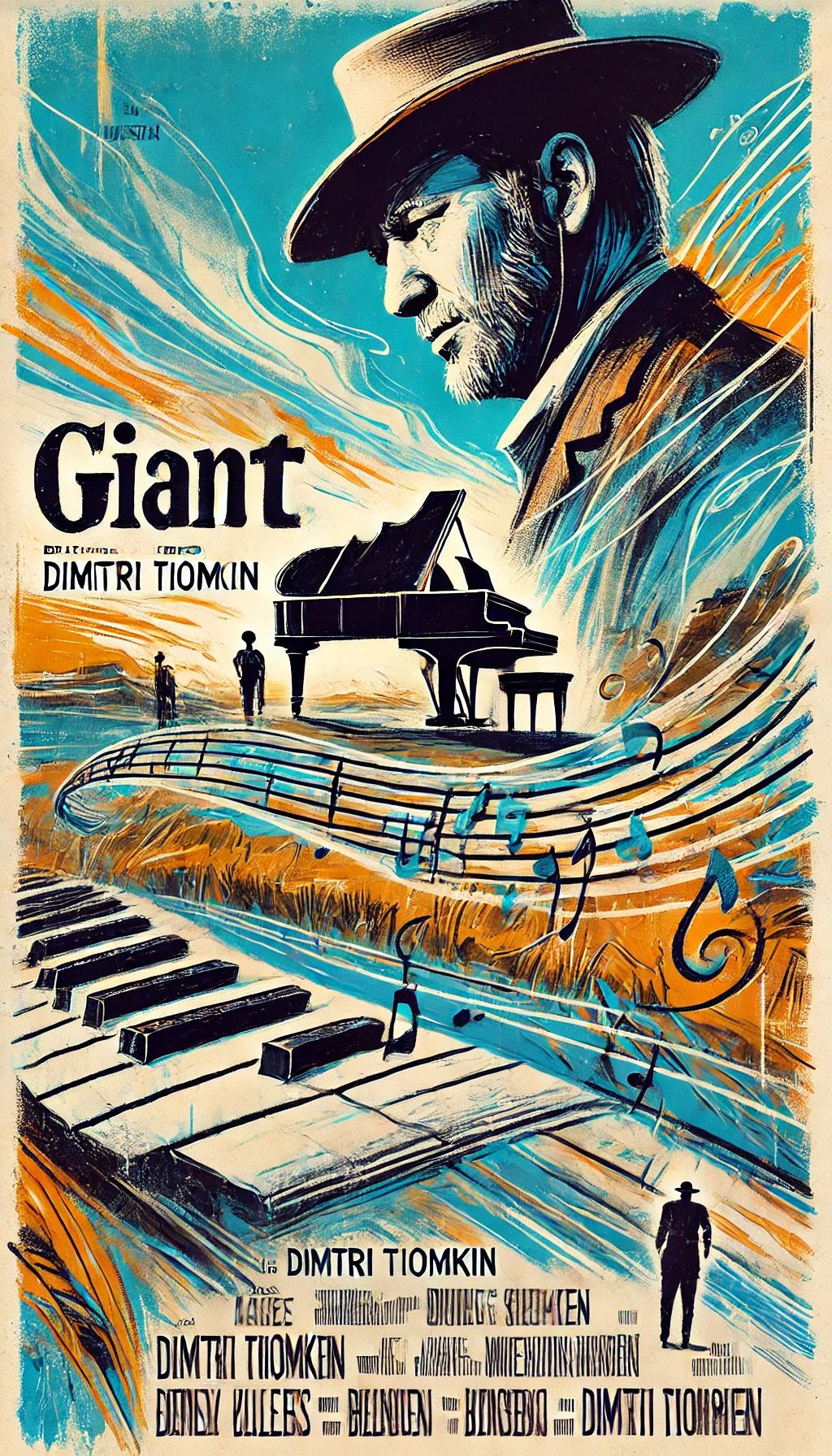
Giant poster art

Giant (1956)

The Story

Wealthy Texas rancher Bick Benedict brings his Eastern bride, Leslie, to his vast ranch, where they clash over class and prejudice across decades. Ranch hand Jett Rink strikes oil and becomes a bitter rival. Elizabeth Taylor, Rock Hudson and James Dean, in his final film, star in George Stevens's epic.

The Music

Tiomkin's Oscar-nominated score captures the vastness of Texas with broad, sweeping themes and folk-flavored melodies. The music traces the decades-long saga, from ranch life to oil wealth, and gives Leslie's struggles emotional depth, matching the film's epic ambition while rooting it firmly in the Texas landscape.