Home  /  Composers  /  Rudolph G. Kopp
Composer

Rudolph G. Kopp

1887–1972

Cecil B. DeMille's Cleopatra

Rudolph G. Kopp was born in Vienna in 1887 and trained as a violinist in the rich musical culture of the Austrian capital. He came to the United States as a young man and was working in Los Angeles by the 1910s, where he played in the Brahms String Quintet, one of the city's notable chamber ensembles, performing music by many composers between 1910 and 1917.

When sound arrived, Kopp joined Paramount's music department, part of a staff of composers who supplied music for a huge range of pictures. In the early 1930s he worked on Josef von Sternberg's Shanghai Express, Ernst Lubitsch's One Hour with You and the Mae West comedy I'm No Angel.

Kopp is best remembered for his work with Cecil B. DeMille. He wrote music for The Sign of the Cross (1932), including its hymns and dances; in 1933 he reportedly turned down the chance to become chief conductor of a Milwaukee orchestra because he was busy with that film. He then scored Cleopatra (1934), DeMille's dazzling spectacle starring Claudette Colbert. With its Roman fanfares, sensuous dances and the exotic music of Cleopatra's barge, the score matched the film's Art Deco extravagance, and the picture was nominated for Best Picture. He also wrote songs for DeMille's The Crusades (1935).

In the 1940s Kopp moved to MGM, where he scored features including Lady in the Lake, the film noir Mystery Street and the Western Vengeance Valley, continuing into the 1950s. Like many studio staff composers, he worked largely without fame, yet musicians like him kept the studio system running. He died in Woodland Hills, California, in 1972.

THE ART

Music by Rudolph G. Kopp

Art celebrating his film scores. Click any piece to view it larger.

THE FILMS

The Story and the Score

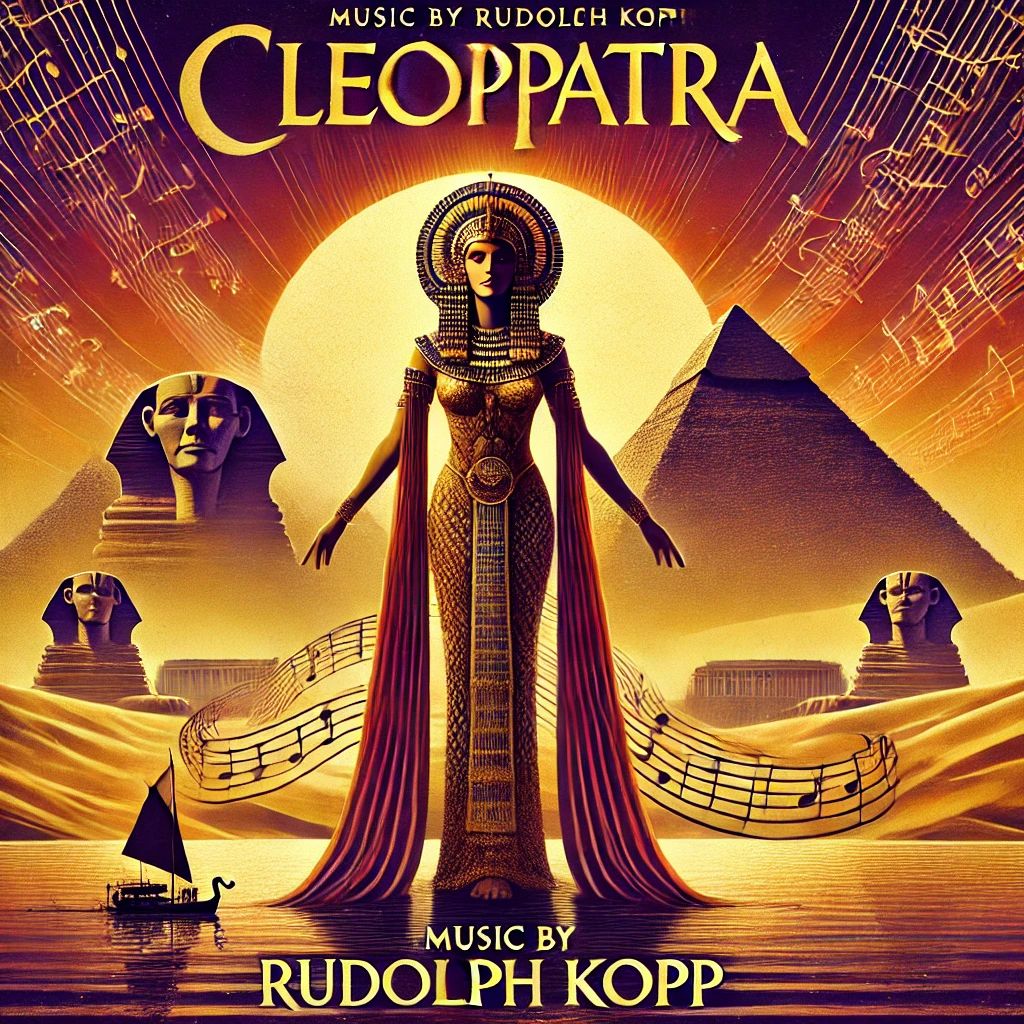
Cleopatra poster art

Cleopatra (1934)

The Story

Cleopatra, queen of Egypt, seduces Julius Caesar to secure her throne, and after his assassination she wins the love of Mark Antony. Their passion draws them into war with Rome. Claudette Colbert stars in Cecil B. DeMille's lavish spectacle, famous for its Art Deco design and luxurious barge scene.

The Music

Kopp's score supplies the pageantry DeMille demanded, from Roman fanfares to sensuous dances and exotic music for Cleopatra's celebrated barge. The music heightens the spectacle and the passion of the doomed lovers, and it matches the film's glittering Art Deco extravagance, giving ancient Egypt the glamour of 1930s Hollywood.