Home  /  Composers  /  Max Steiner
Composer

Max Steiner

1888–1971

The father of film music

Max Steiner is often called the father of film music, and with good reason. Born in Vienna in 1888 into a prominent theatrical family, he was a musical prodigy who studied at the city's Imperial Academy of Music and, as the story goes, counted Richard Strauss as his godfather. He was conducting operettas while still a teenager and worked in London before moving to New York in 1914, where he spent more than a decade orchestrating and conducting Broadway shows.

Steiner came to Hollywood in 1929, just as sound was arriving, and soon became RKO's music director. His score for King Kong (1933) proved what an original orchestral score could do for a film, building suspense, shaping character and making audiences believe in an impossible creature. Two years later, The Informer earned him the first of his three Academy Awards.

In 1936 he moved to Warner Bros., where he stayed for most of his career and became the studio's signature musical voice. He wrote at a remarkable pace, sometimes scoring a dozen films a year, including Jezebel, Dodge City, Casablanca, Now, Voyager and Since You Went Away; the last two brought him his second and third Oscars. On loan to David O. Selznick, he composed Gone with the Wind (1939), whose Tara theme remains one of the most recognizable melodies ever written for the screen.

Steiner's lush, theme-driven style, in which characters and places carry their own melodies, set the template for the Hollywood sound. He scored more than 300 films and worked into the mid-1960s. He died in Hollywood in 1971.

THE ART

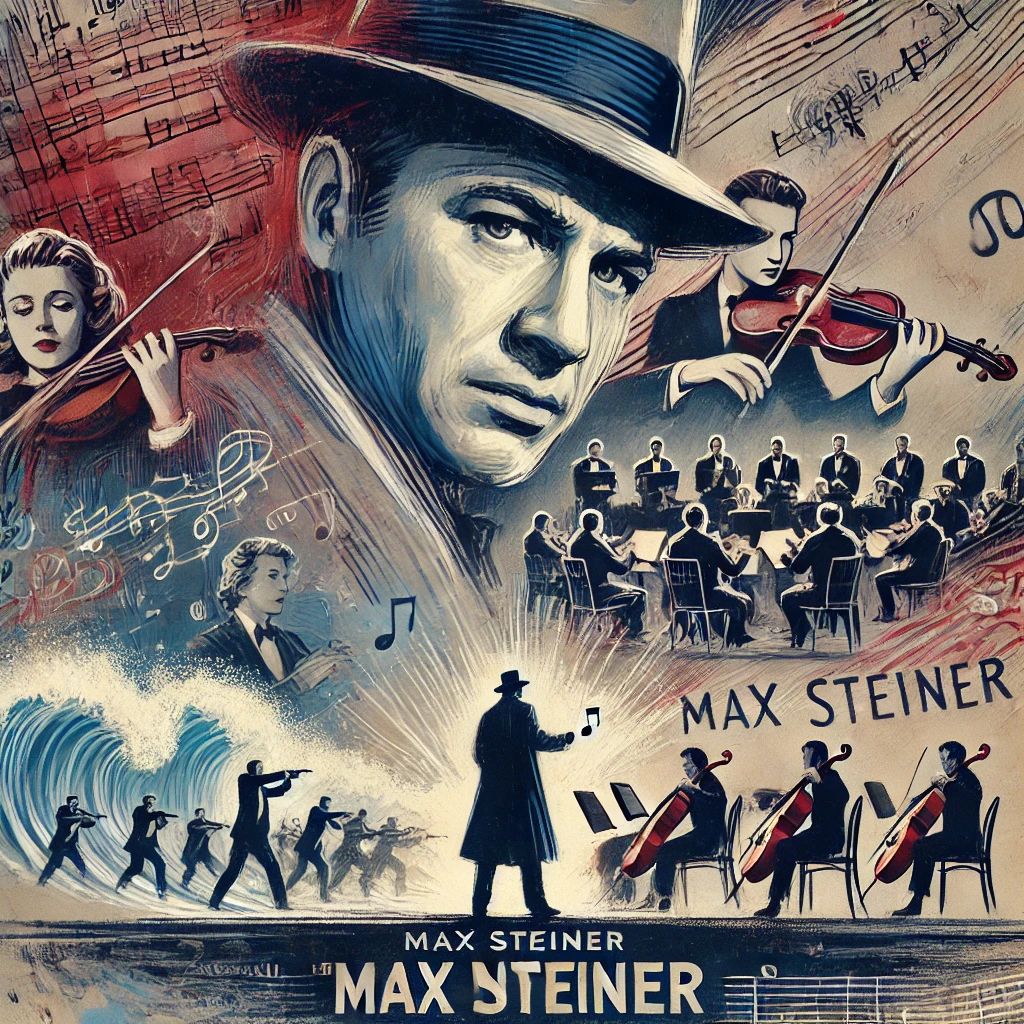
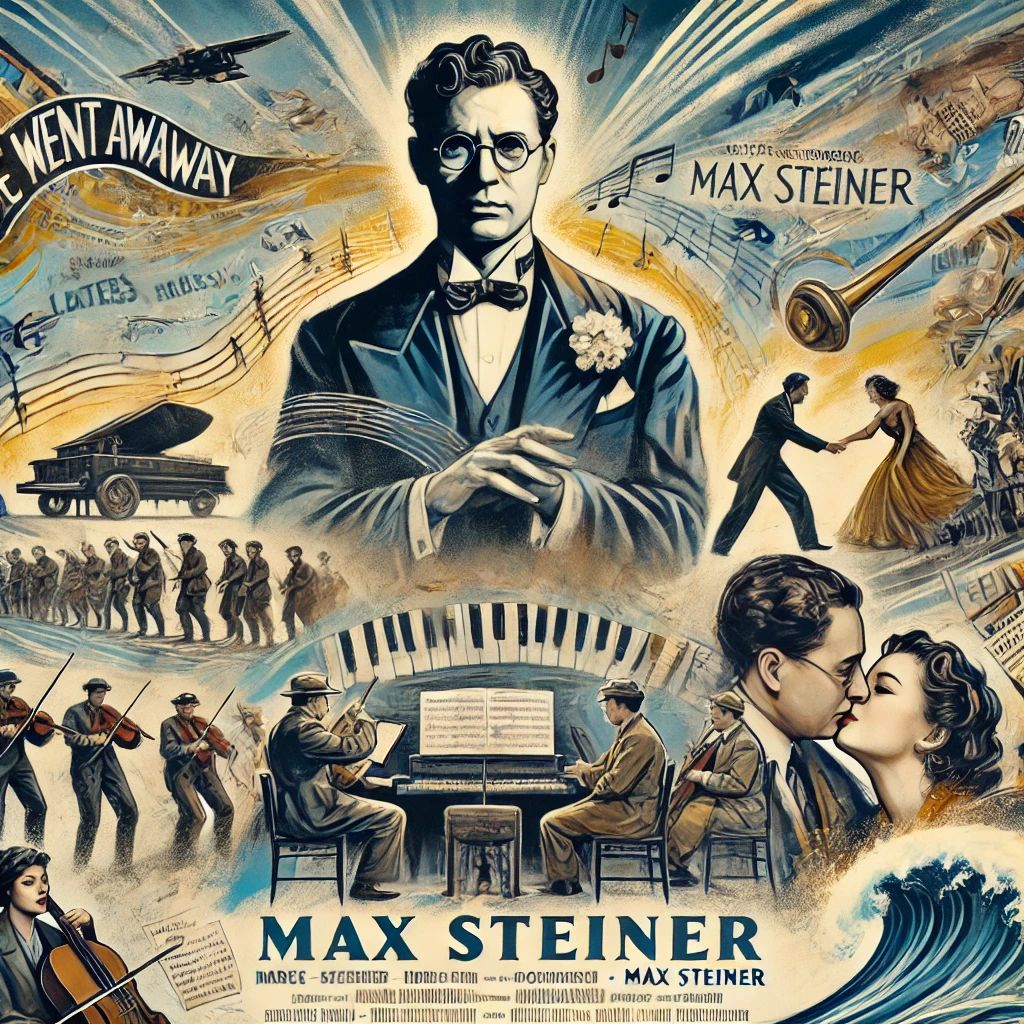
Music by Max Steiner

Art celebrating his film scores. Click any piece to view it larger.

THE FILMS

The Story and the Score

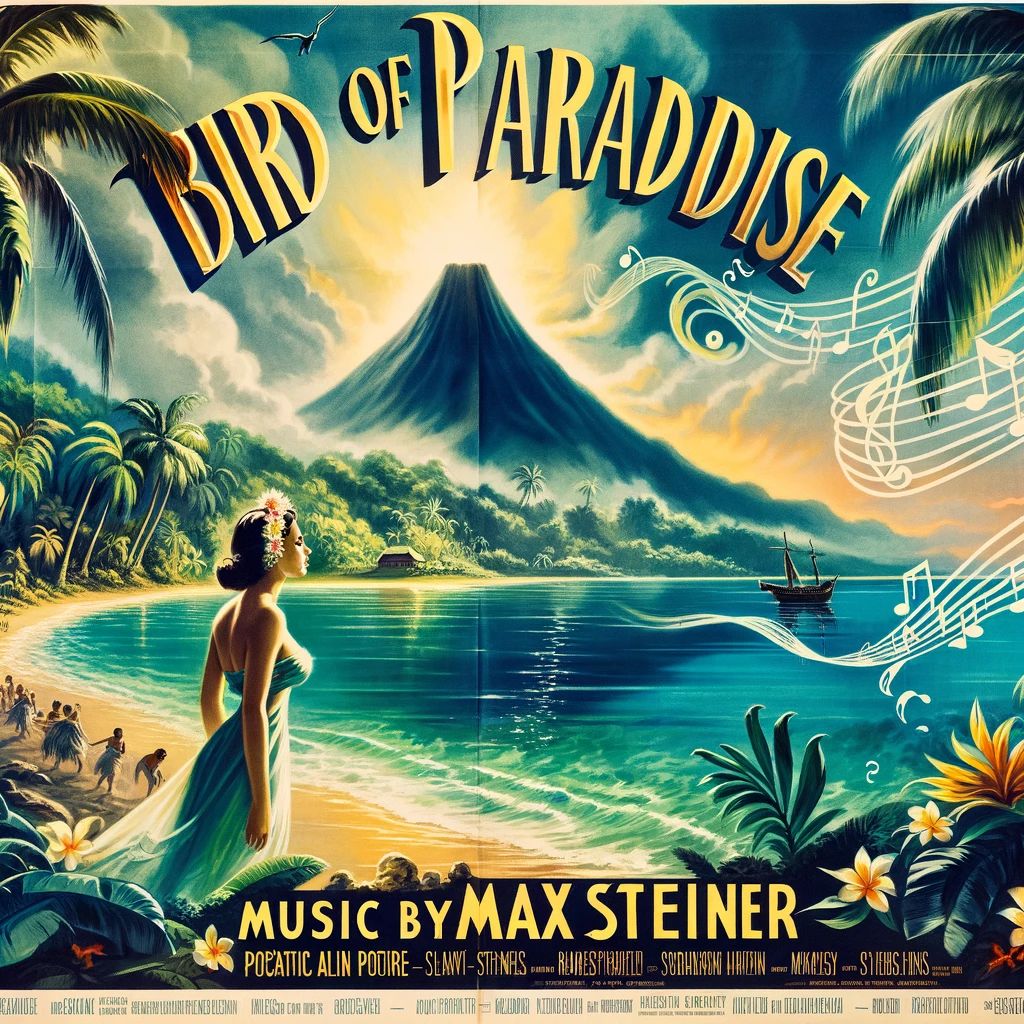
Bird of Paradise poster art

Bird of Paradise (1932)

The Story

An American adventurer sailing the South Seas falls in love with Luana, the daughter of an island chief. Their romance defies tribal law, and when the island's volcano begins to rumble, Luana is chosen as a sacrifice to appease the gods. Dolores del Río and Joel McCrea star in King Vidor's exotic romantic drama.

The Music

Steiner scored nearly the entire film, a rarity in 1932, when producers still worried audiences would wonder where unseen music came from. His lush orchestration, with island rhythms and soaring romantic strings, carried the story's emotion and helped prove that continuous dramatic underscoring could work in talking pictures.
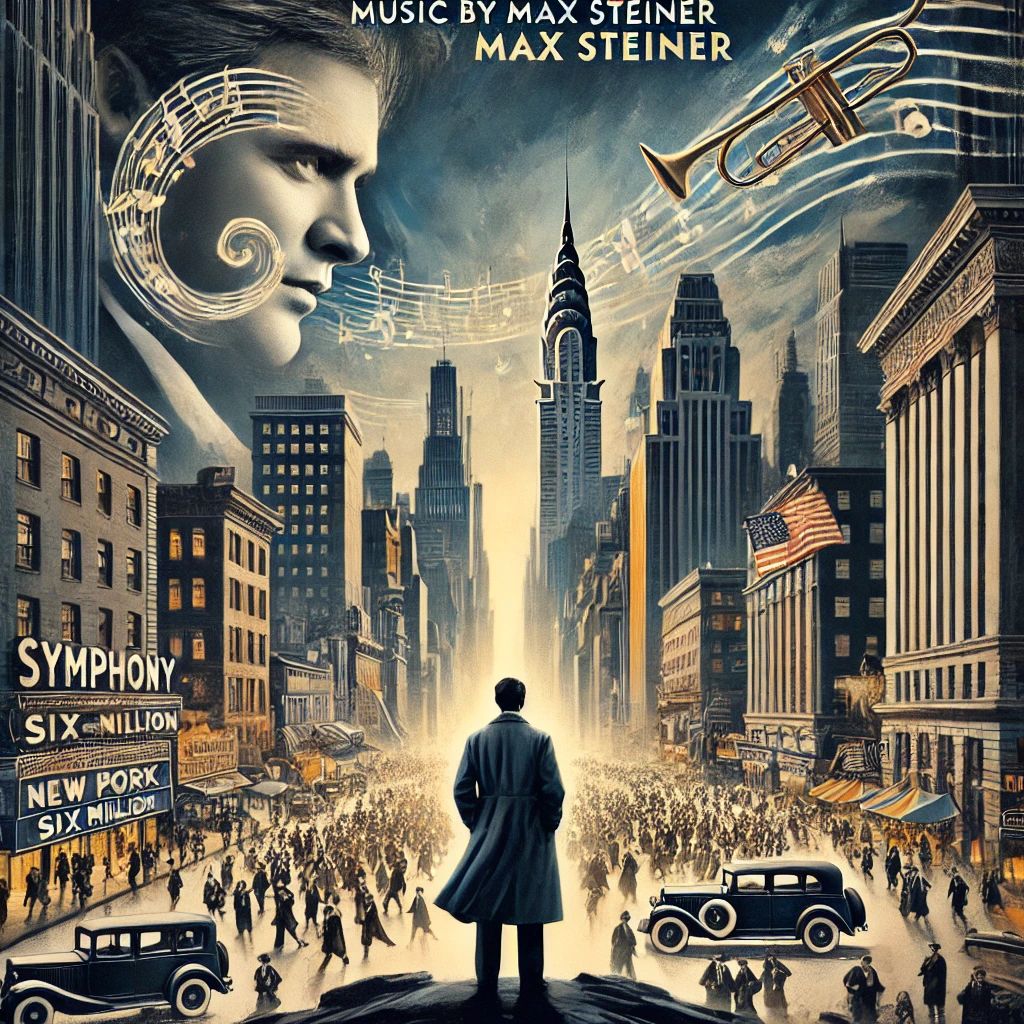
Symphony of Six Million poster art

Symphony of Six Million (1932)

The Story

A gifted doctor raised on New York's Lower East Side leaves his poor Jewish neighborhood for a lucrative Park Avenue practice, turning his back on the people and the woman who believed in him. When tragedy strikes his own family, he must face his ideals. Ricardo Cortez and Irene Dunne star in this Fannie Hurst story.

The Music

Steiner regarded this score as an early breakthrough in scoring beneath dialogue. Drawing on Jewish musical traditions and tender family themes, he let the music deepen scenes of home and conscience rather than simply fill silence. Its success helped convince producer David O. Selznick to commit to original scores for more films.

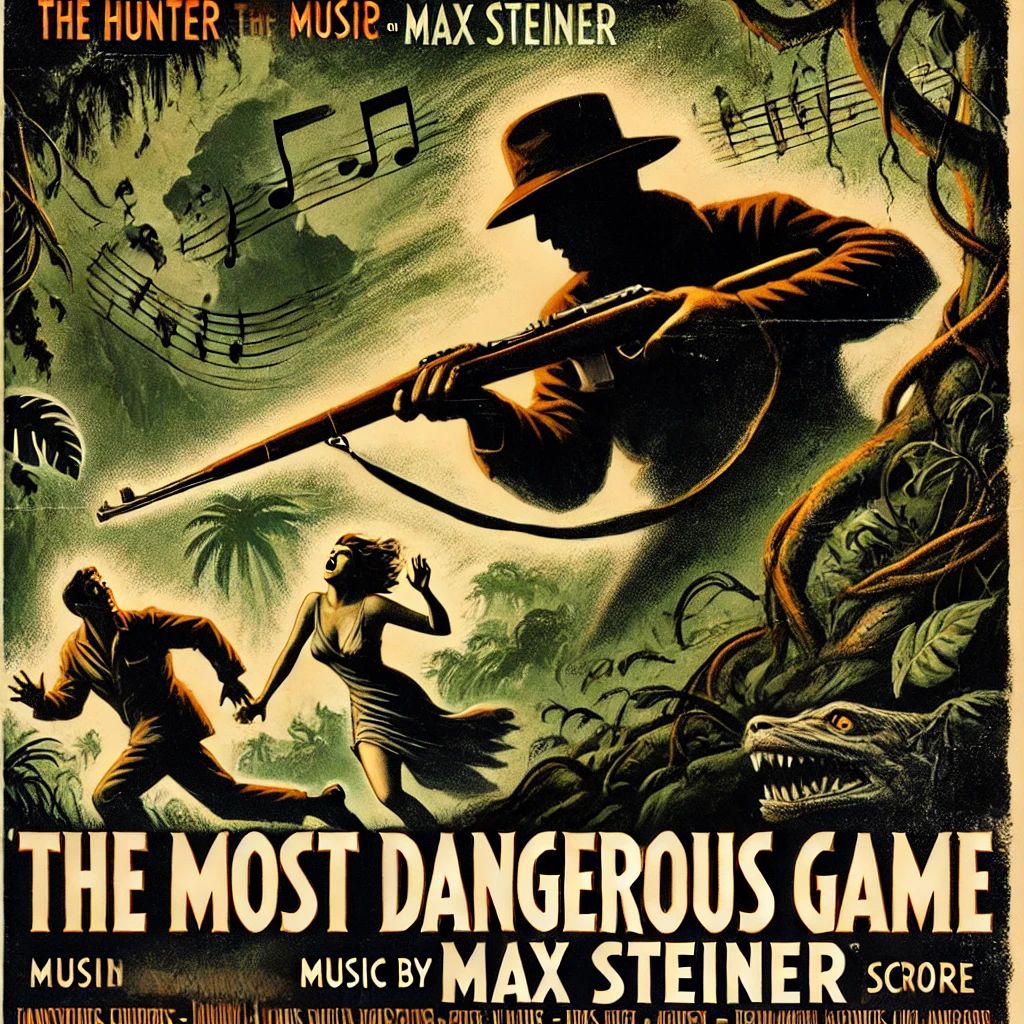
The Most Dangerous Game poster art

The Most Dangerous Game (1932)

The Story

Shipwrecked on a remote island, big-game hunter Bob Rainsford becomes the guest of the cultured Count Zaroff, who has grown bored with hunting animals and now stalks human prey. Rainsford and fellow castaway Eve must survive a deadly night-long chase through the jungle. Joel McCrea and Fay Wray star in this taut thriller.

The Music

Steiner built the score around a haunting Russian-flavored waltz that Zaroff himself plays on the piano, giving the villain an elegant menace. In the climactic hunt the music becomes a breathless, pounding chase. Made by much of the same team as King Kong, it was a proving ground for the style Steiner perfected next.

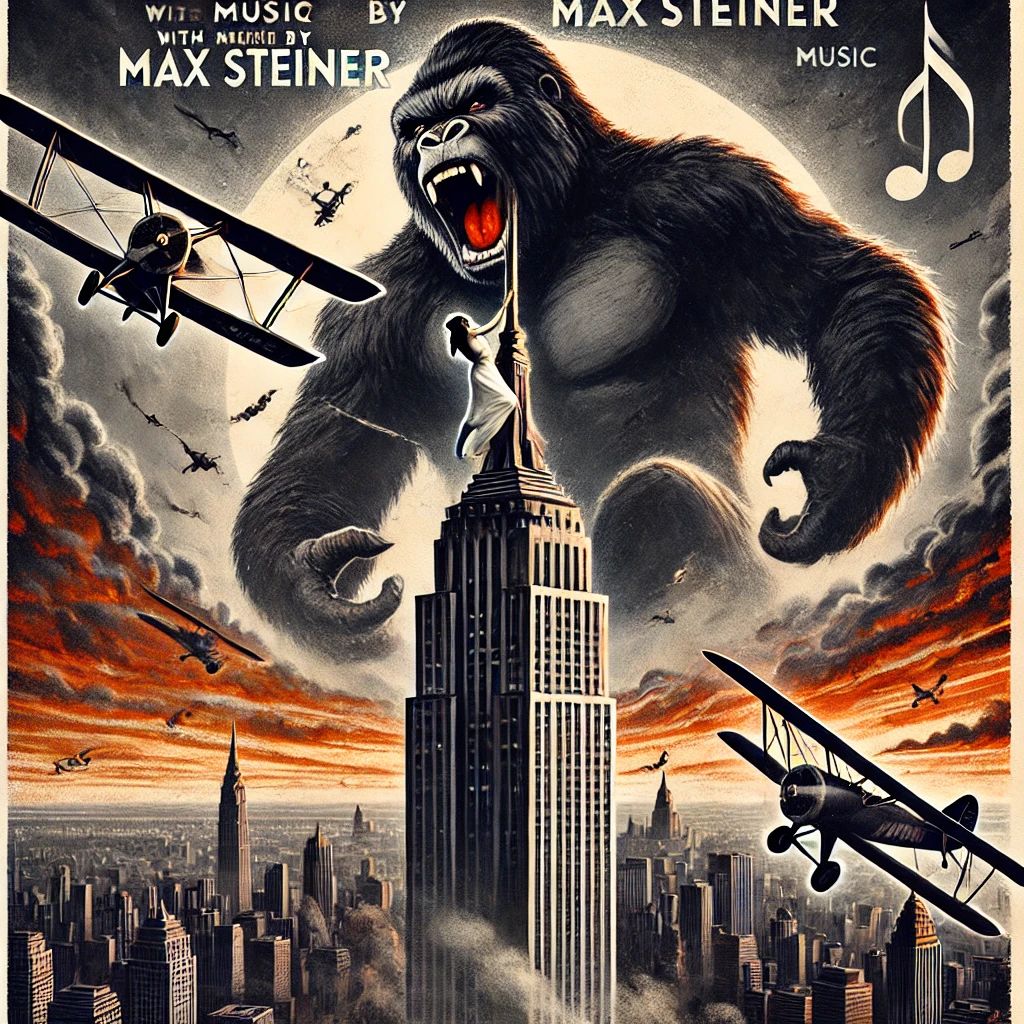
King Kong poster art

King Kong (1933)

The Story

A film crew sails to mysterious Skull Island, where actress Ann Darrow is seized by islanders and offered as a sacrifice to Kong, a giant ape. After a perilous rescue, the filmmakers capture Kong and bring him to New York as a spectacle, but he escapes and carries Ann to the top of the Empire State Building.

The Music

Steiner's score was a landmark. Sparse during the opening scenes, it erupts as the ship nears Skull Island, with pounding drums, a menacing descending motif for Kong and tender music for his fascination with Ann. Closely matched to the action, the music made a stop-motion puppet feel alive and showed Hollywood what original scoring could do.

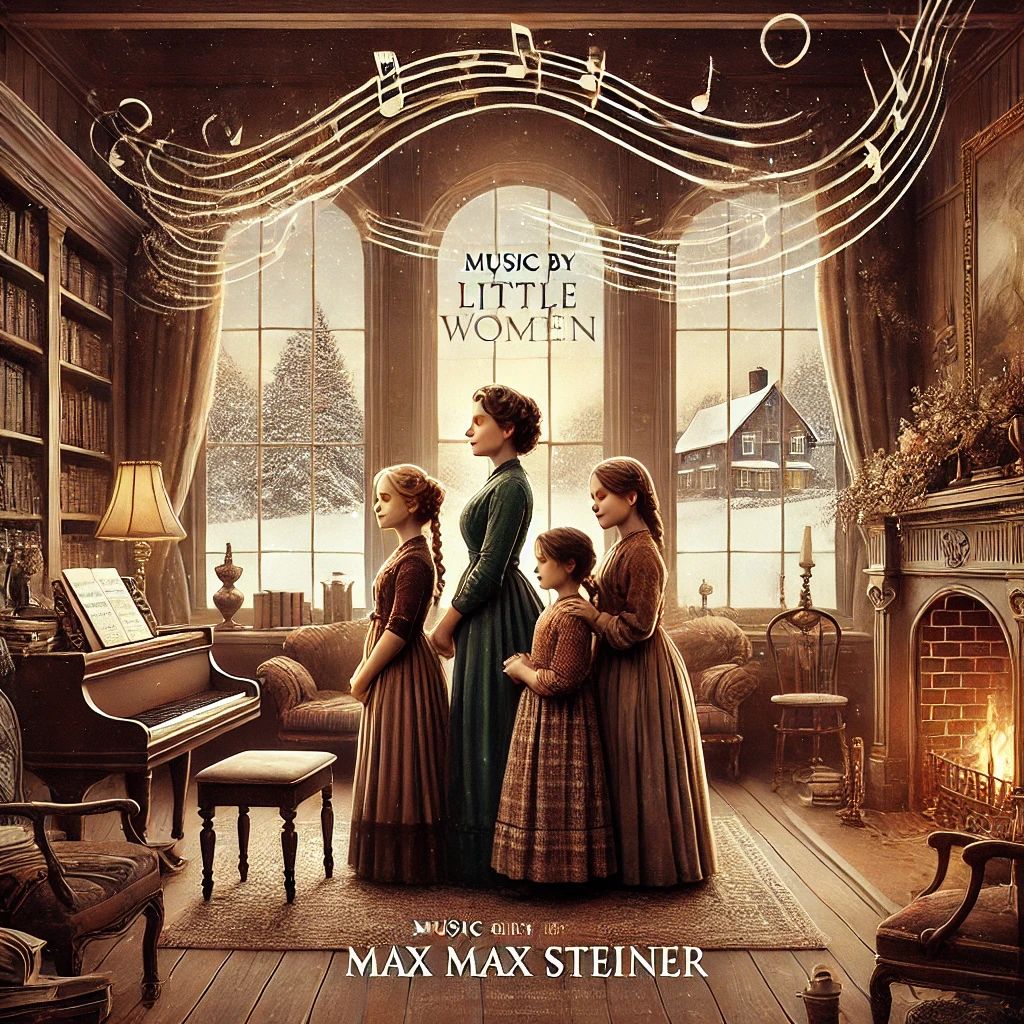
Little Women poster art

Little Women (1933)

The Story

In Civil War–era Massachusetts, the four March sisters, spirited writer Jo, motherly Meg, gentle Beth and vain Amy, grow up together while their father is away at war. Katharine Hepburn stars as Jo in George Cukor's warm adaptation of Louisa May Alcott's beloved novel of family, ambition, first love and heartbreak.

The Music

Steiner wove familiar 19th-century songs, hymns and Christmas carols into a gentle score that evokes New England home life. His music warms the family scenes and quietly underlines Beth's illness and Jo's restless ambitions without overwhelming the story's intimacy, giving the film much of its nostalgic, old-fashioned glow and lasting emotional pull.

The Little Minister poster art

The Little Minister (1934)

The Story

In 1840s Scotland, an earnest young minister arrives in a strict village and finds himself enchanted by Babbie, a mysterious young woman who roams the countryside disguised as a gypsy and helps the local weavers resist the authorities. Katharine Hepburn stars in this adaptation of J. M. Barrie's novel, a romance that threatens the minister's standing.

The Music

Steiner gave the film a strong Scottish character, drawing on folk melodies and the lilt of traditional airs. The music contrasts the rigid piety of the village with Babbie's free spirit, and its warm romantic themes soften the story's tensions into the gentle, whimsical charm audiences expected from a J. M. Barrie tale.

The Informer poster art

The Informer (1935)

The Story

In 1920s Dublin, during Ireland's years of political violence, the brutish, impoverished Gypo Nolan betrays his friend, a wanted rebel, to the authorities for a £20 reward. Guilt-ridden and drinking away the money, he is hunted through a foggy night by the rebels he betrayed. Victor McLaglen won an Oscar in John Ford's drama.

The Music

Steiner's Oscar-winning score follows Gypo's conscience almost note by note. A haunting theme tied to the reward, music that mimics coins dropping on a table, and Irish melodies drifting through the fog-bound streets turn the film into something close to opera, showing how closely music could trace a character's inner life.

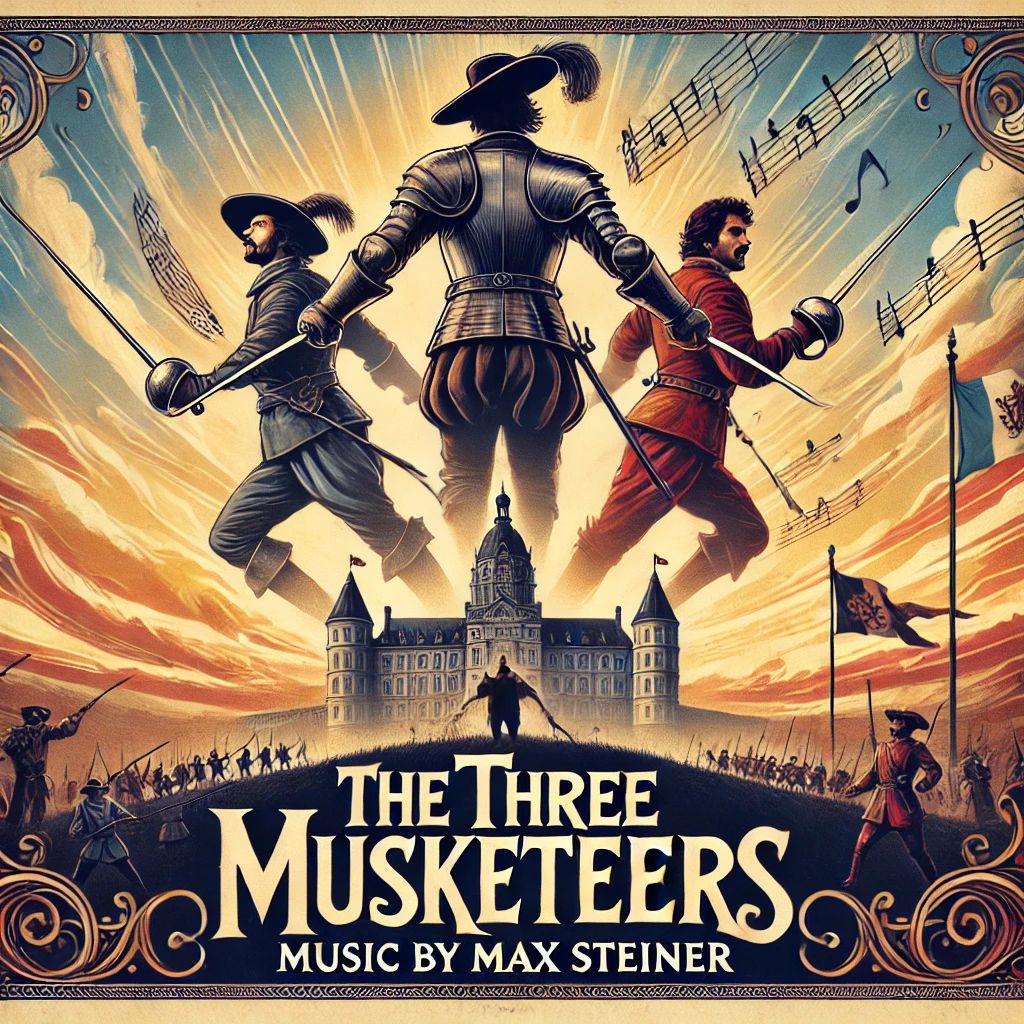
The Three Musketeers poster art

The Three Musketeers (1935)

The Story

Young d'Artagnan travels to Paris hoping to join the King's Musketeers and soon falls in with the legendary trio Athos, Porthos and Aramis. Together they foil a plot by the scheming Cardinal Richelieu and the treacherous Milady de Winter to disgrace the Queen. RKO's version of the Alexandre Dumas classic stars Walter Abel.

The Music

Steiner's score supplies the dash and swagger that swashbucklers demand, with rousing marches for the musketeers and courtly themes for the palace intrigue. Brisk, rhythmic action music matches the swordplay, and romantic passages warm d'Artagnan's adventures, anticipating the adventure scores that would soon make Warner Bros. famous.

The Charge of the Light Brigade poster art

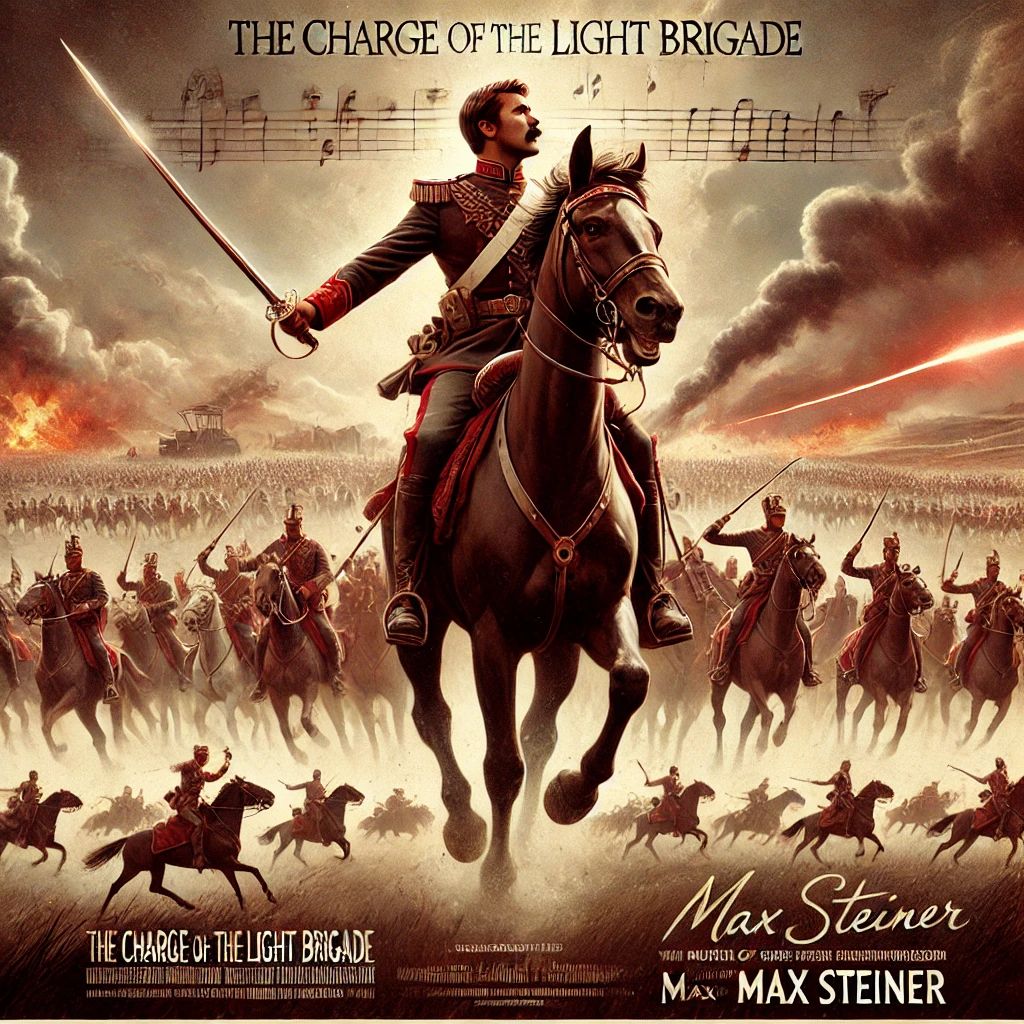
The Charge of the Light Brigade (1936)

The Story

A British officer serving in India vows revenge after a local ruler massacres a garrison of soldiers and their families. When the chieftain later sides with Russia in the Crimean War, the officer leads the famous Light Brigade on its doomed charge at Balaclava. Errol Flynn and Olivia de Havilland star in Michael Curtiz's adventure.

The Music

One of Steiner's first scores at Warner Bros., it set the tone for his years there. Martial fanfares, Indian color and a stirring theme for the British cavalry build toward the climactic charge, where the music, matched to galloping horses and Tennyson's famous verses, rises to a thunderous and tragic crescendo.

The Garden of Allah poster art

The Garden of Allah (1936)

The Story

In the Algerian desert, a sheltered young woman seeking peace after years in a convent school falls in love with a mysterious, troubled stranger. They marry, but she discovers he is a Trappist monk who broke his vows and fled his monastery. Marlene Dietrich and Charles Boyer star in this lavish early Technicolor romance.

The Music

Steiner's Oscar-nominated score evokes the desert's vastness and mystery with North African colors, while sweeping romantic themes carry the doomed love affair. Working with the vivid Technicolor images, the music creates a sense of spiritual longing and turns the lovers' choice between passion and faith into heartfelt high melodrama.

Jezebel poster art

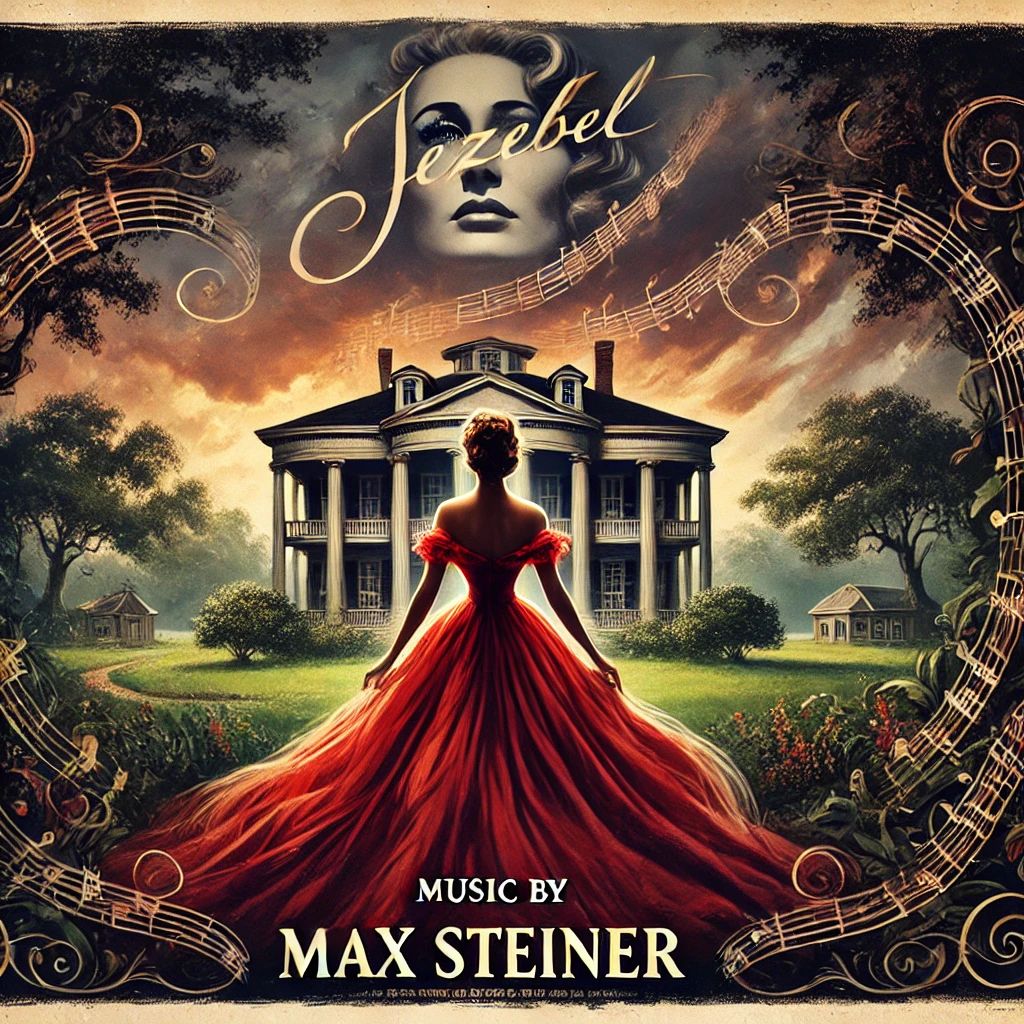
Jezebel (1938)

The Story

In 1850s New Orleans, willful Southern belle Julie Marsden scandalizes society by wearing a red dress to a ball where unmarried women traditionally wear white, driving away her fiancé. When a yellow fever epidemic strikes the city, Julie seeks redemption. Bette Davis won her second Oscar in William Wyler's drama, opposite Henry Fonda.

The Music

Steiner's score captures the elegance of the Old South, with graceful waltzes for the famous ball and lilting themes for Julie. During the yellow fever epidemic the music turns somber and foreboding. Its sweeping romantic writing helps make Julie both infuriating and sympathetic as she moves toward her final act of sacrifice.

Dodge City poster art

Dodge City (1939)

The Story

Cattle agent Wade Hatton arrives in lawless Dodge City, Kansas, a railroad boomtown ruled by a ruthless saloon owner and his gunmen. After a child is killed in the violence, Hatton reluctantly becomes sheriff and sets out to clean up the town. Errol Flynn and Olivia de Havilland star in this rollicking Technicolor Western.

The Music

Steiner gives the Western a big, celebratory sound, with galloping rhythms and folk tunes of the frontier. A rousing main theme captures the coming of the railroad and the energy of the boomtown, while music for the famous saloon brawl adds comic exuberance. The score helped shape the sound of the Hollywood Western.

Gone with the Wind poster art

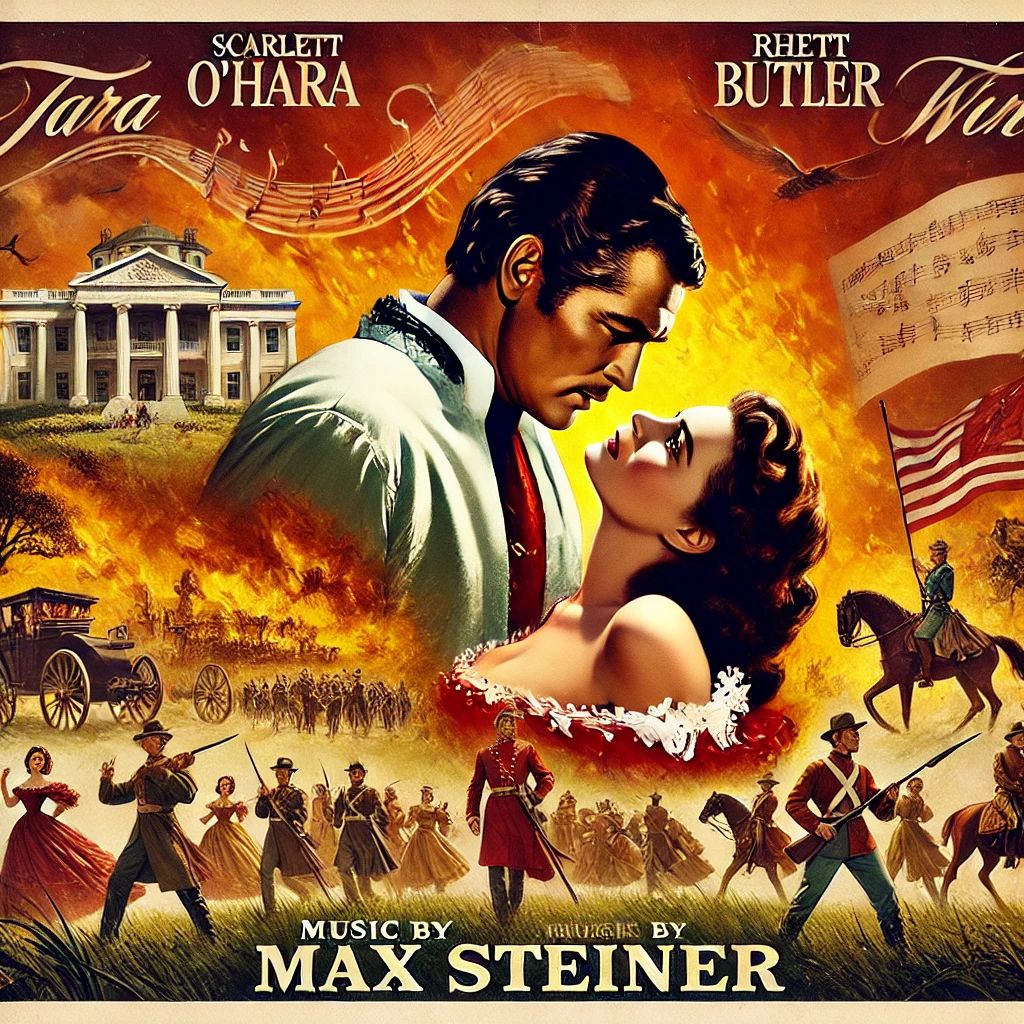
Gone with the Wind (1939)

The Story

Spoiled Georgia belle Scarlett O'Hara pines for the gentlemanly Ashley Wilkes, but the Civil War and Reconstruction sweep away her privileged world. Fighting to save her family's plantation, Tara, she marries three times, finally to the dashing Rhett Butler, whose patience eventually runs out. David O. Selznick's epic won eight competitive Academy Awards.

The Music

With well over two hours of music, Steiner's score is one of the longest of its era. Its famous Tara theme represents Scarlett's enduring bond with the land and returns whenever she draws strength from home. Steiner also wove in Southern songs and individual themes for the major characters, binding the vast epic together.

Now, Voyager poster art

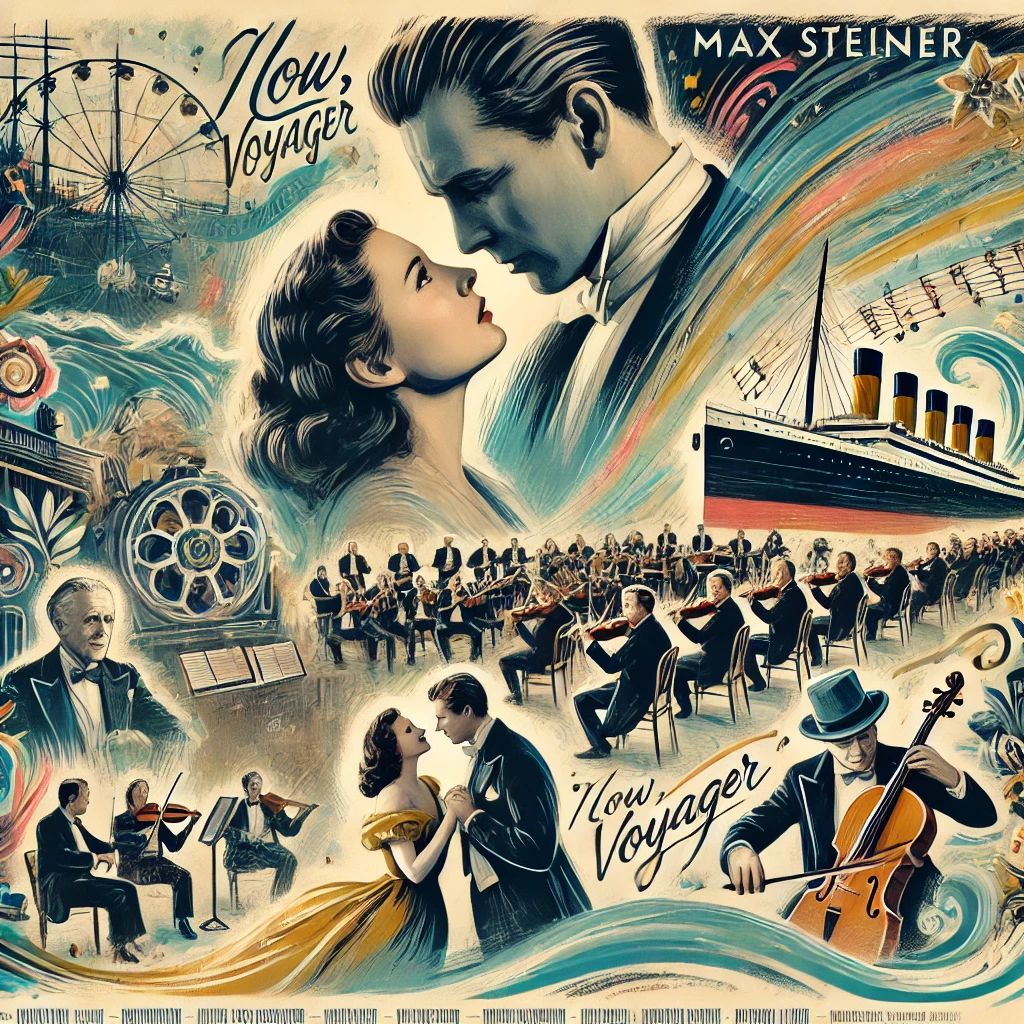
Now, Voyager (1942)

The Story

Repressed Charlotte Vale, crushed by her domineering Boston mother, recovers at a sanitarium and blossoms on a South American cruise, where she falls in love with Jerry, an unhappily married man. Back home she builds a new life and finds purpose caring for Jerry's troubled young daughter. Bette Davis stars in this beloved melodrama.

The Music

Steiner won his second Oscar for a score that charts Charlotte's transformation. Its yearning love theme, later the popular song "It Can't Be Wrong," blossoms as she does and returns in the famous final scene, with its shared cigarettes and talk of the moon and the stars, turning quiet emotional victories into soaring moments.

Since You Went Away poster art

Since You Went Away (1944)

The Story

With her husband away fighting in World War II, Anne Hilton keeps her American home together with her two daughters, taking in a cranky retired colonel as a lodger. The family copes with rationing, romance and loss as the war reaches into everyday life. Claudette Colbert, Jennifer Jones and Shirley Temple star in Selznick's home-front epic.

The Music

Steiner's Oscar-winning score balances warmth and heartache. Alongside tender original themes for the family, he wove in familiar patriotic and popular songs, giving the home front a sense of shared community. As the family waits for news of the absent father, the music carries hope through quiet domestic scenes to an emotional Christmas climax.

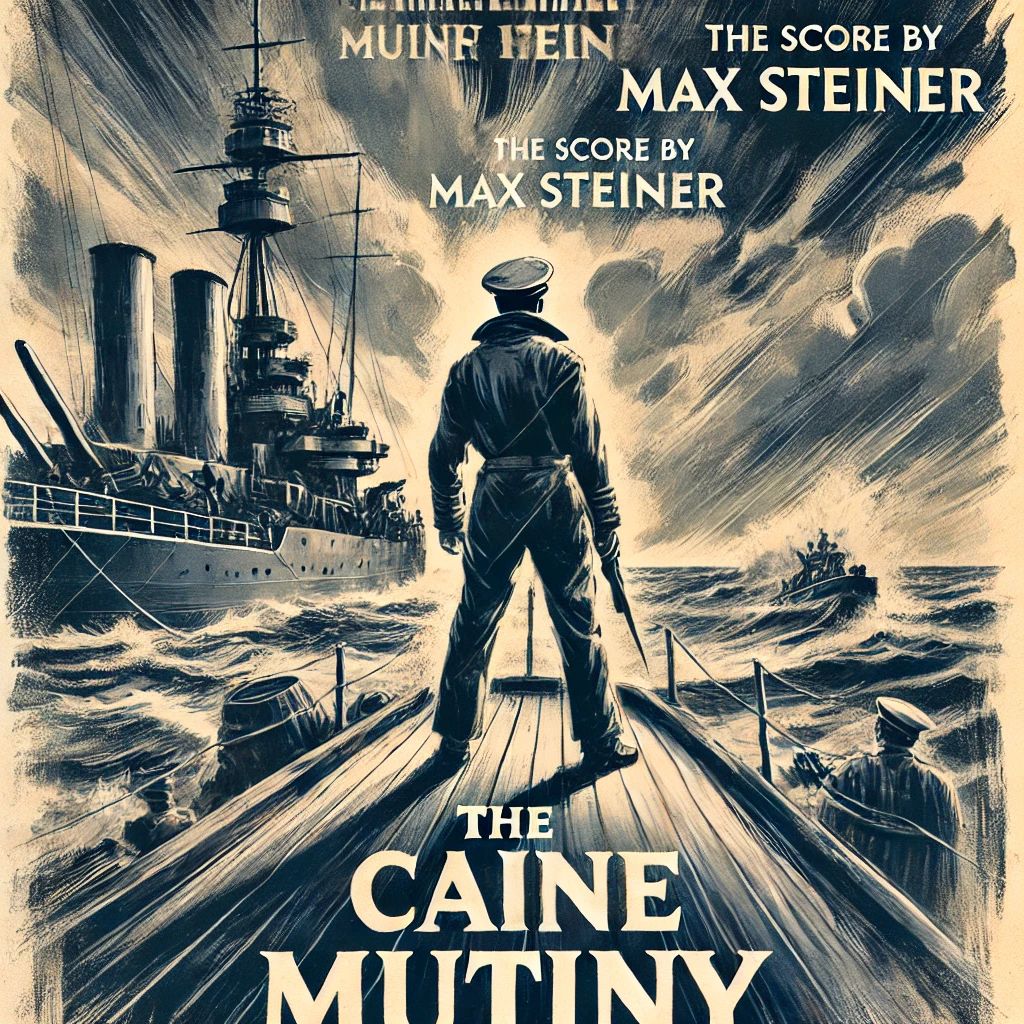
The Caine Mutiny poster art

The Caine Mutiny (1954)

The Story

Aboard the battered minesweeper USS Caine during World War II, the new captain, Lieutenant Commander Queeg, grows increasingly erratic and paranoid. During a violent typhoon his officers relieve him of command, and they must then face a court-martial for mutiny. Humphrey Bogart's portrayal of Queeg, nervously rolling steel balls in his hand, became legendary.

The Music

Steiner's Oscar-nominated score opens with a jaunty naval march that captures shipboard routine, while darker music builds tension as Queeg unravels. During the typhoon the orchestra churns with the storm, and the score quietly supports the shifting loyalties and moral uncertainty that lead to the tense courtroom drama of the court-martial.