Home  /  Composers  /  Charlie Chaplin
Composer

Charlie Chaplin

1889–1977

The clown who composed his own scores

Charlie Chaplin is remembered as the greatest clown of the silent screen, but he was also a self-taught composer who wrote the music for nearly all his films. Born in London in 1889 to music-hall entertainers, he grew up in poverty, absorbing popular songs and stage tunes. He taught himself violin and cello, playing left-handed, and although he could not write notation fluently, he hummed and played his melodies for arrangers who helped put them on paper.

Chaplin resisted talking pictures, and City Lights (1931) was released with a synchronized score of his own while remaining essentially silent. For the blind flower girl he used the popular Spanish song "La Violetera," and his music helped make the film's final scene one of the most moving in cinema. Modern Times (1936) followed, its melody later becoming the song "Smile."

Chaplin also returned to his earlier silent classics. In 1942 he reissued The Gold Rush (1925) with new narration and an original score that earned an Oscar nomination. Late in life he composed new music for re-releases of other silent films, including The Kid (1921), which he scored in 1971 at the age of 82.

His music is lyrical, sentimental and closely tied to the action, reflecting his music-hall roots. In 1973 Chaplin shared his only competitive Academy Award, for the score of Limelight (1952), which had not played in Los Angeles until 1972 and so had only then become eligible. He was knighted in 1975 and died in Switzerland in 1977.

THE ART

Music by Charlie Chaplin

Art celebrating his film scores. Click any piece to view it larger.

THE FILMS

The Story and the Score

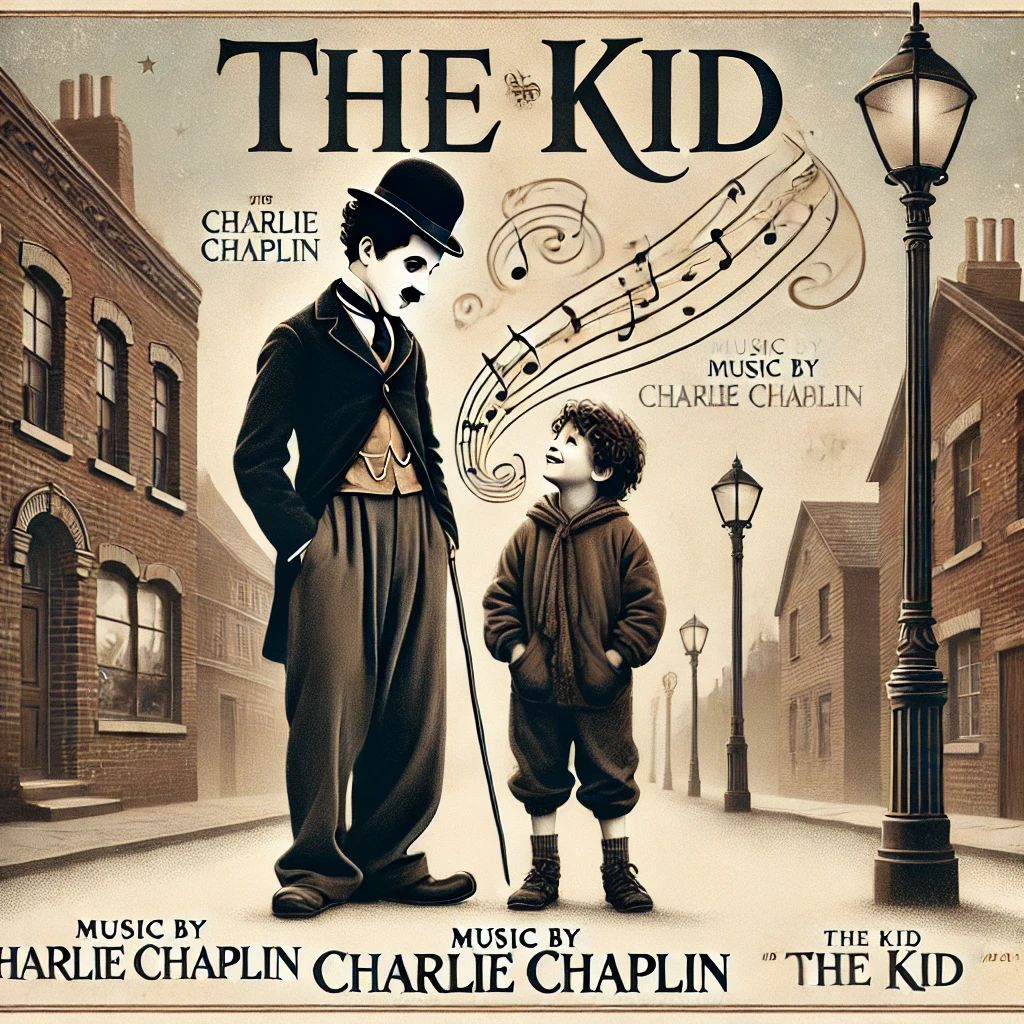
The Kid poster art

The Kid (1921)

Chaplin's score was written for the 1971 reissue

The Story

The Little Tramp finds an abandoned baby in an alley and reluctantly raises him. Five years later the boy has become his partner in petty schemes, breaking windows for the Tramp to repair, until the authorities try to take the child away. Chaplin's first feature, starring young Jackie Coogan, blends comedy and heartbreak.

The Music

Chaplin composed this score for the film's 1971 reissue, when he was in his eighties. His gentle, sentimental melodies underline the bond between the Tramp and the boy, while lively music drives the famous rooftop chase. The score shows Chaplin's lifelong gift for blending comedy and emotion.
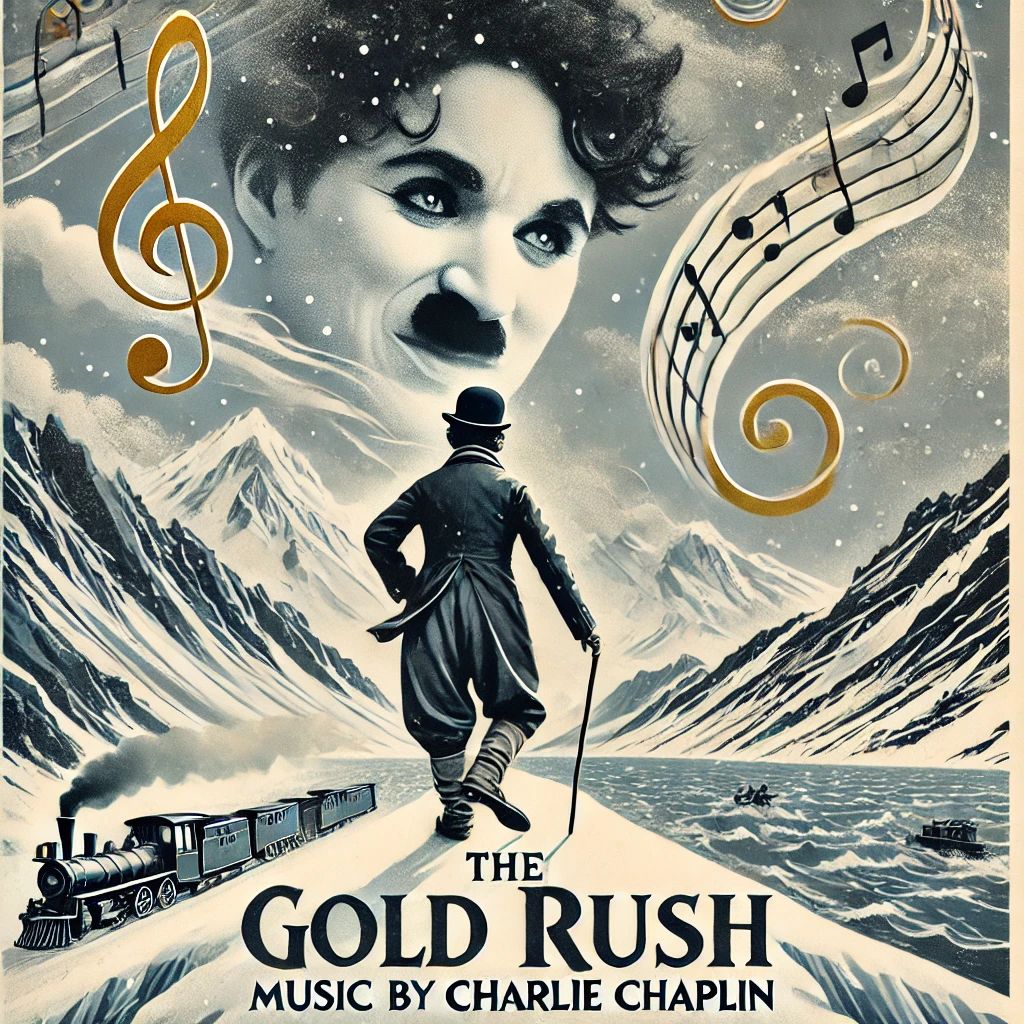
The Gold Rush poster art

The Gold Rush (1925)

Chaplin's score was written for the 1942 reissue

The Story

The Little Tramp joins the Klondike gold rush in search of fortune. He survives blizzards, starvation and a cabin teetering on the edge of a cliff, falls for a dance-hall girl and eventually strikes it rich. The film includes Chaplin's famous scenes of eating a boiled shoe and making dinner rolls dance on forks.

The Music

Chaplin composed this score for the film's 1942 reissue, adding his own narration. The music, which earned an Oscar nomination, mixes sentiment with comic energy, underlining the Tramp's loneliness, hope and resilience. It helped keep the silent classic alive for a new generation of audiences.

City Lights poster art

City Lights (1931)

The Story

The Little Tramp falls in love with a blind flower girl who mistakes him for a millionaire. He befriends an eccentric millionaire who recognizes him only when drunk, and struggles to raise money for an operation to restore the girl's sight. The film ends with one of the most celebrated scenes in cinema.

The Music

Released with Chaplin's own synchronized score and sound effects but no dialogue, City Lights proved that a silent comedy could thrive in the sound era. The popular song "La Violetera" becomes the flower girl's theme, and the music for the final recognition scene is among the most moving in film history.