Home  /  Composers  /  Bernard Herrmann
Composer

Bernard Herrmann

1911–1975

Citizen Kane, Vertigo and Psycho

Bernard Herrmann was born in New York City in 1911 and studied at New York University and the Juilliard School. Fiercely independent and famously short-tempered, he joined CBS Radio in the 1930s, composing and conducting for its drama programs. There he met Orson Welles and scored Welles's Mercury Theatre broadcasts, including the notorious 1938 War of the Worlds.

When Welles went to Hollywood, Herrmann went with him. His first film score, Citizen Kane (1941), was revolutionary: instead of continuous lush melody, he used short phrases and unusual instrumental colors to define mood and character, and he insisted on orchestrating his own music. The same year he won the Academy Award for The Devil and Daniel Webster (also released as All That Money Can Buy), a strikingly original score in which country fiddle tunes turn eerie.

Herrmann's most celebrated partnership was with Alfred Hitchcock, from The Trouble with Harry (1955) through Marnie (1964). Vertigo, with its spiraling, obsessive love theme, is often ranked among the greatest film scores ever written, and the stabbing violins of the shower scene in Psycho, a score for strings alone, are probably the most famous cue in movie history. He also scored North by Northwest, The Day the Earth Stood Still and fantasy adventures for Ray Harryhausen.

After a bitter split with Hitchcock over Torn Curtain, Herrmann found new admirers among younger directors, scoring Brian De Palma's Sisters and Obsession. He finished recording his final score, Martin Scorsese's Taxi Driver, just before his death in Los Angeles on Christmas Eve 1975.

THE ART

Music by Bernard Herrmann

Art celebrating his film scores. Click any piece to view it larger.

THE FILMS

The Story and the Score

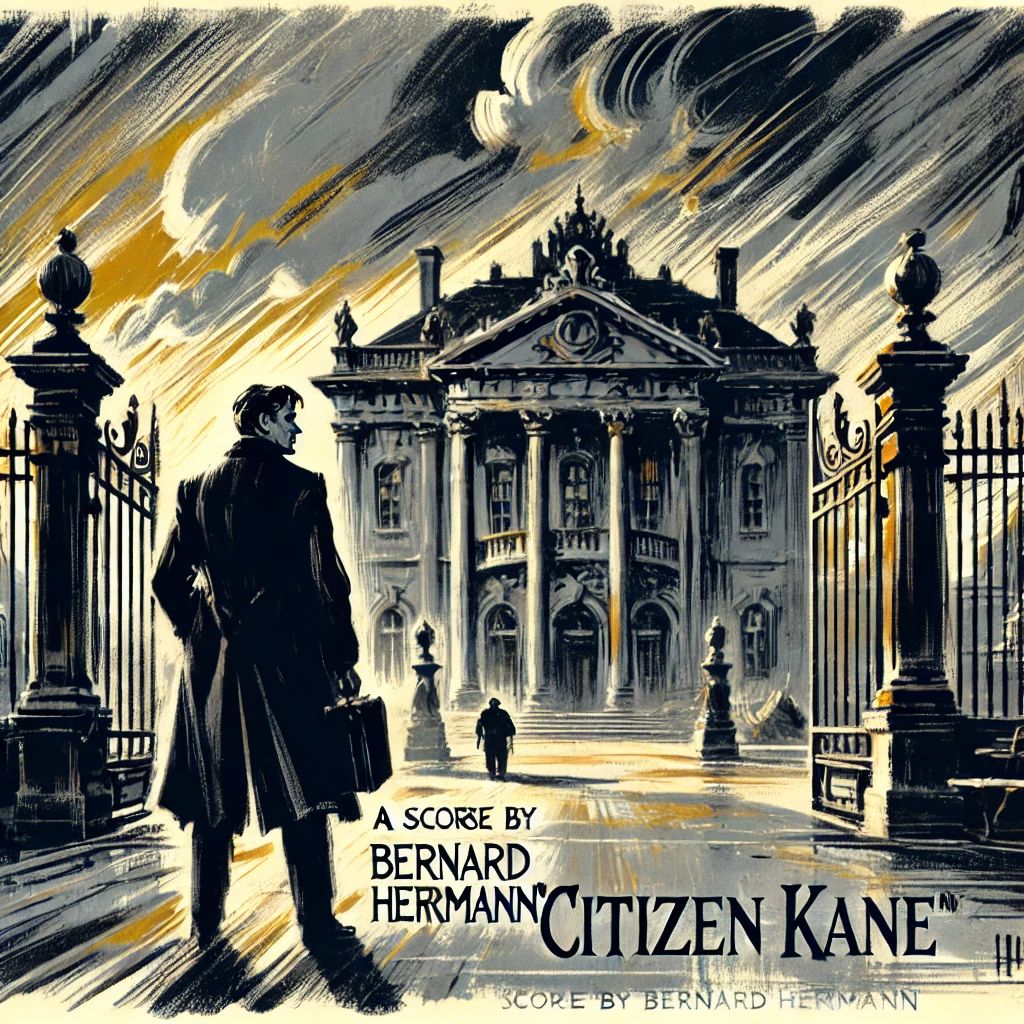
Citizen Kane poster art

Citizen Kane (1941)

The Story

When publishing tycoon Charles Foster Kane dies whispering the word "Rosebud," a reporter interviews those who knew him to discover its meaning. Through flashbacks, Kane's rise and fall unfold, from idealistic young publisher to lonely old man in a vast, empty mansion. Orson Welles directed and starred in what is often called the greatest film ever made.

The Music

Herrmann used short motifs rather than long melodies to suggest Kane's power and loneliness. A brooding opening sets the mood at Xanadu, a breakfast-table montage uses variations on a waltz to show a marriage cooling, and a mock opera aria exposes Susan's failure. The score shapes the story with remarkable economy.
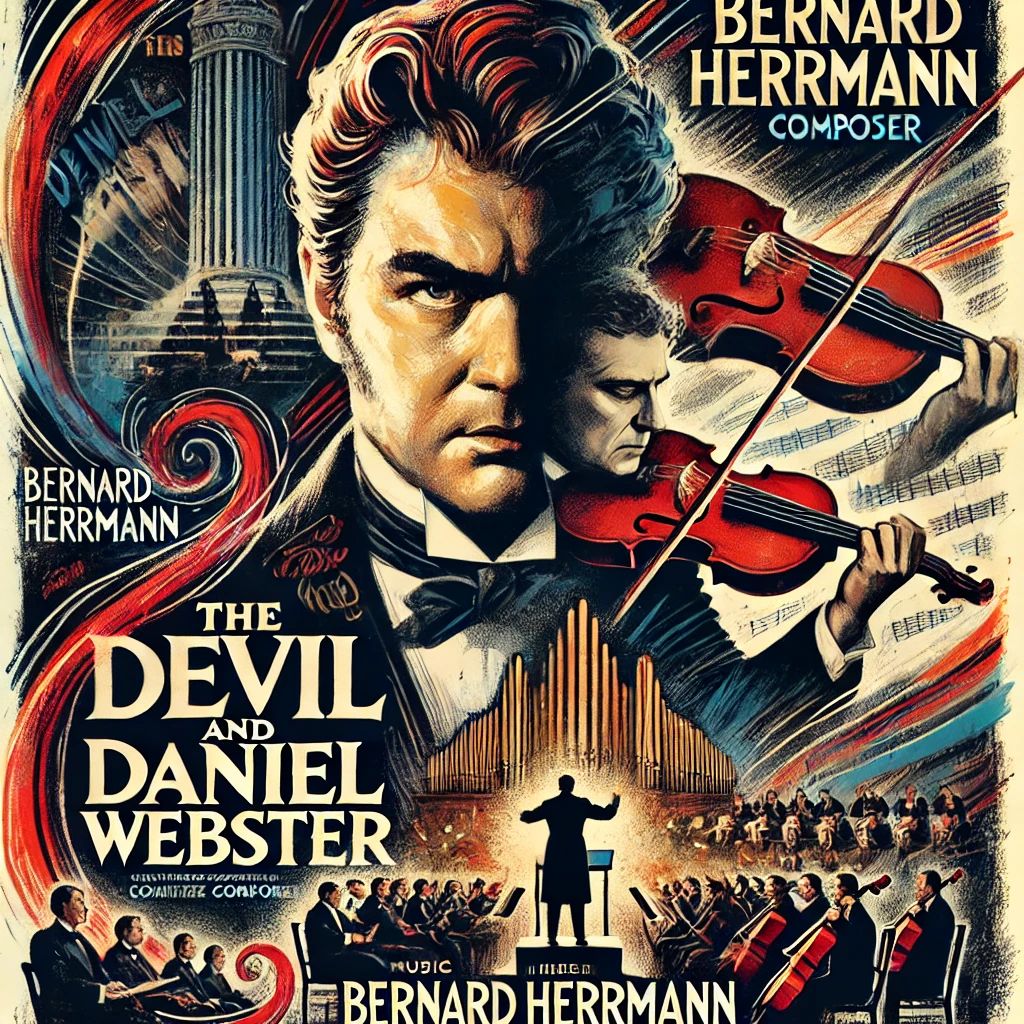
The Devil and Daniel Webster poster art

The Devil and Daniel Webster (1941)

The Story

Desperate New Hampshire farmer Jabez Stone sells his soul to the Devil, called Mr. Scratch, for seven years of prosperity. As good fortune corrupts him, he turns to the great orator Daniel Webster, who argues for Jabez's soul before a jury of the damned. Walter Huston plays the Devil in this American fantasy.

The Music

Herrmann won his only Oscar for this score, which draws on American folk tunes, including a fiddle version of "Pop Goes the Weasel" played with diabolical energy at a barn dance. He also recorded the hum of telephone wires for eerie effects, making the folk tale both homespun and unsettling.

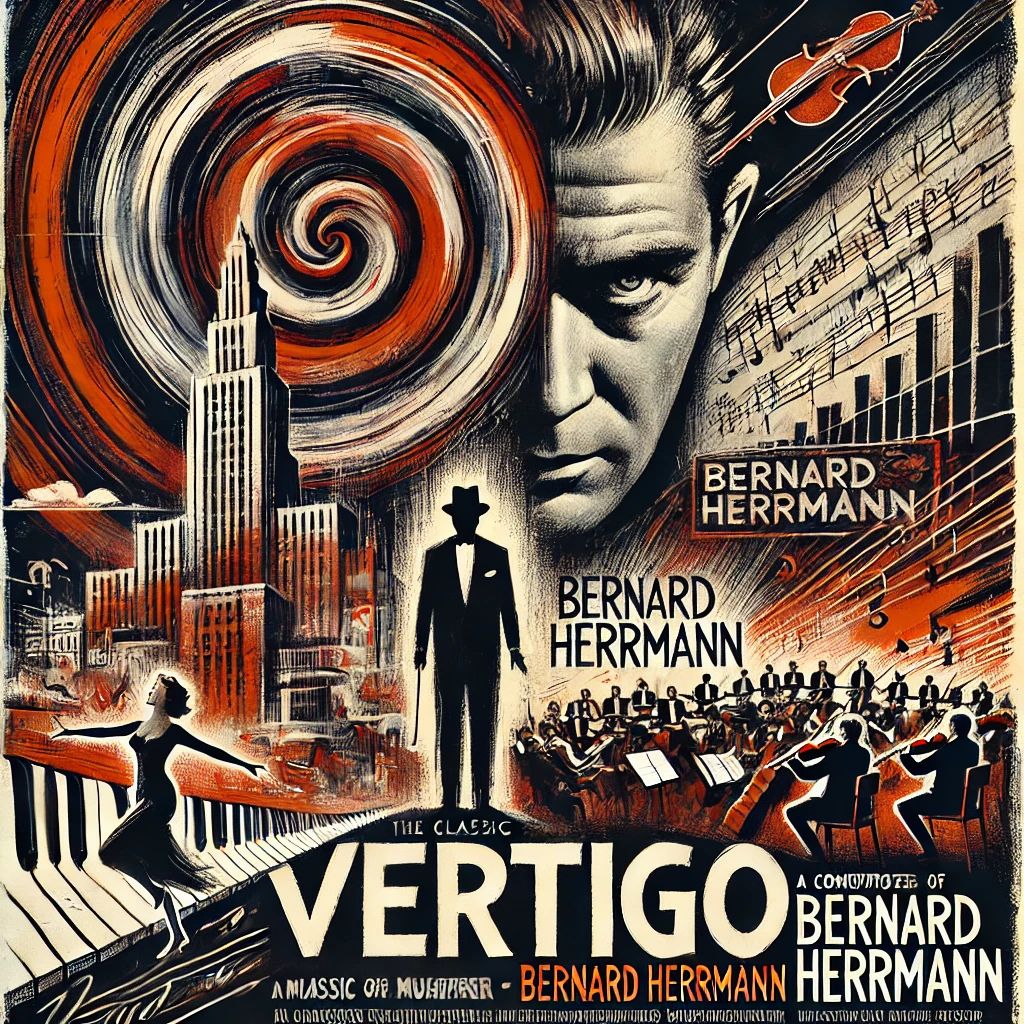
Vertigo poster art

Vertigo (1958)

The Story

Retired San Francisco detective Scottie Ferguson, who suffers from a fear of heights, is hired to follow an old friend's wife, Madeleine, who seems possessed by the past. Scottie falls obsessively in love with her, and after tragedy strikes, he tries to recreate her. James Stewart and Kim Novak star in Hitchcock's masterpiece.

The Music

Herrmann's score is the film's emotional core. Spiraling figures suggest dizziness and obsession, and a long love theme indebted to Wagner's Tristan and Isolde conveys Scottie's yearning. In the famous scene where his recreation is complete, the music swells over a dreamlike image, saying what words cannot.

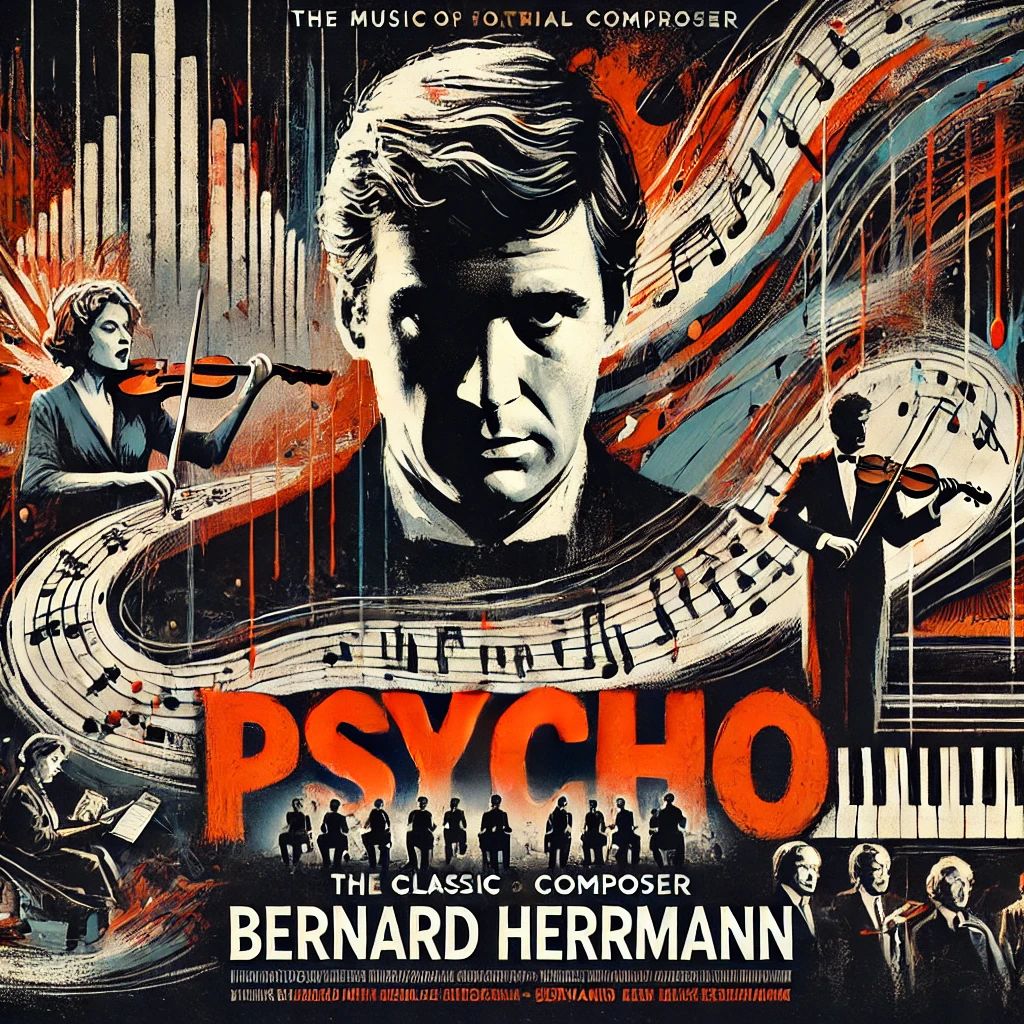
Psycho poster art

Psycho (1960)

The Story

Phoenix secretary Marion Crane steals $40,000 from her employer and flees, stopping for the night at the remote Bates Motel. Its shy manager, Norman Bates, seems devoted to his invalid mother. Marion's shocking murder in the shower launches a search into the motel's dark secrets. Anthony Perkins stars in Hitchcock's thriller.

The Music

Herrmann scored Psycho for strings alone, a black-and-white sound for a black-and-white film. Restless rhythms drive Marion's flight, and the shrieking violins of the shower scene became the most famous cue in film history. Hitchcock originally wanted that scene unscored, but Herrmann's music changed his mind.