Home  /  Composers  /  Adolph Deutsch
Composer

Adolph Deutsch

1897–1980

Some Like It Hot and MGM's great musicals

Adolph Deutsch was born in London in 1897 and emigrated to the United States as a teenager, settling in Buffalo, New York. He began his career as a pianist and arranger, orchestrating Broadway shows and leading dance orchestras, and he worked as an arranger for Paul Whiteman.

In 1937 Deutsch joined Warner Bros., where he scored some of the studio's toughest crime films and dramas. High Sierra, The Maltese Falcon (1941) and Northern Pursuit showed his gift for taut, atmospheric music, and his work helped shape the sound of early film noir.

In the late 1940s he moved to MGM and became one of the great music directors of its golden age of musicals. He won three Academy Awards for scoring musicals: Annie Get Your Gun (1950), shared with Roger Edens; Seven Brides for Seven Brothers (1954), shared with Saul Chaplin; and Oklahoma! (1955), shared with Robert Russell Bennett and Jay Blackton. Show Boat and The Band Wagon were among his other MGM credits.

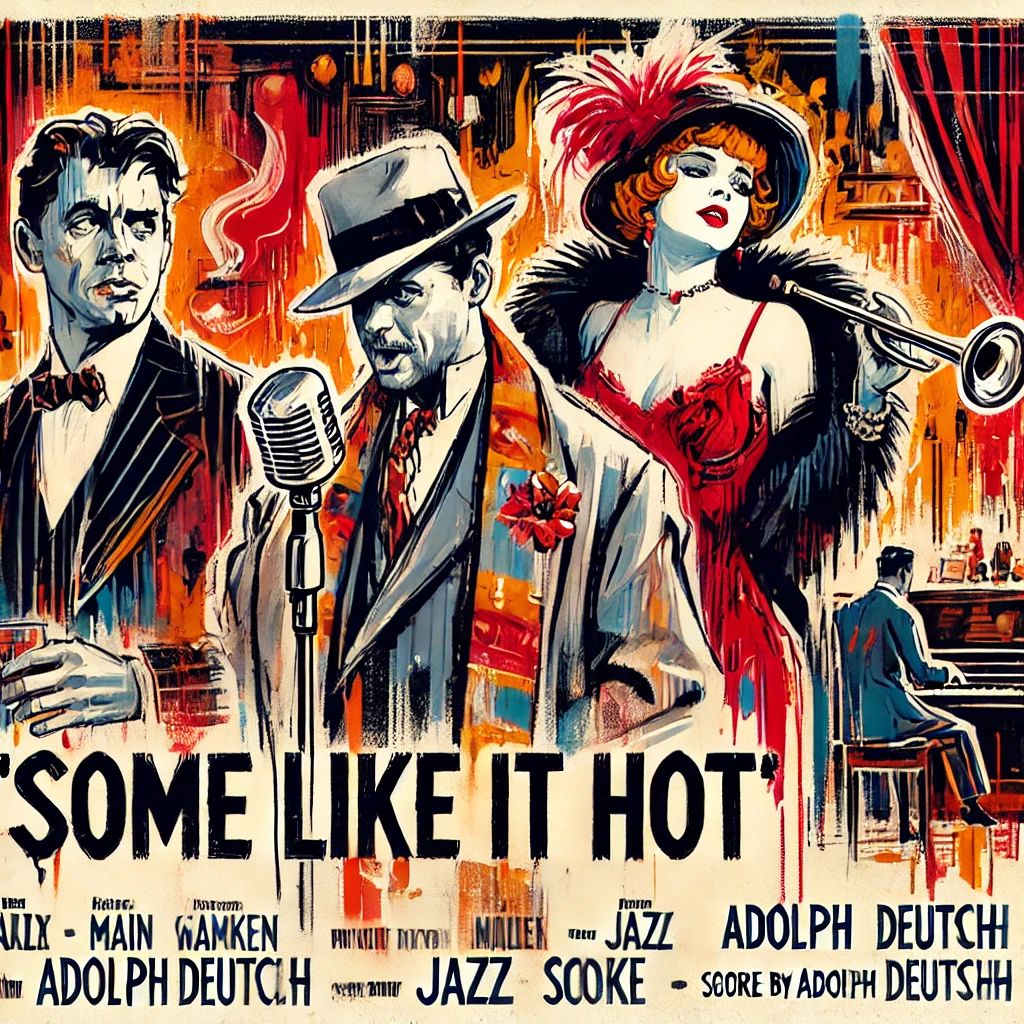
Late in his career Deutsch formed a memorable partnership with director Billy Wilder. For Some Like It Hot (1959), the riotous comedy starring Marilyn Monroe, Tony Curtis and Jack Lemmon, he blended Jazz Age dance music with his own score to capture the Prohibition-era setting, and he followed it with The Apartment (1960). Deutsch was also a leader of the Screen Composers Association, which fought for composers' rights. He died in 1980.

THE ART

Music by Adolph Deutsch

Art celebrating his film scores. Click any piece to view it larger.

THE FILMS

The Story and the Score

Some Like It Hot poster art

Some Like It Hot (1959)

The Story

Two Chicago jazz musicians who witness the St. Valentine's Day Massacre disguise themselves as women and join an all-female band headed for Florida. One falls for the band's singer, Sugar Kane, while the other is courted by a millionaire. Marilyn Monroe, Tony Curtis and Jack Lemmon star in Billy Wilder's comedy.

The Music

Deutsch's score blends Jazz Age dance music with his own writing, capturing the Prohibition-era setting. Monroe's songs, including "I Wanna Be Loved by You," add charm, and the music keeps the comedy moving at a brisk pace, making the film one of the greatest comedies ever made.